
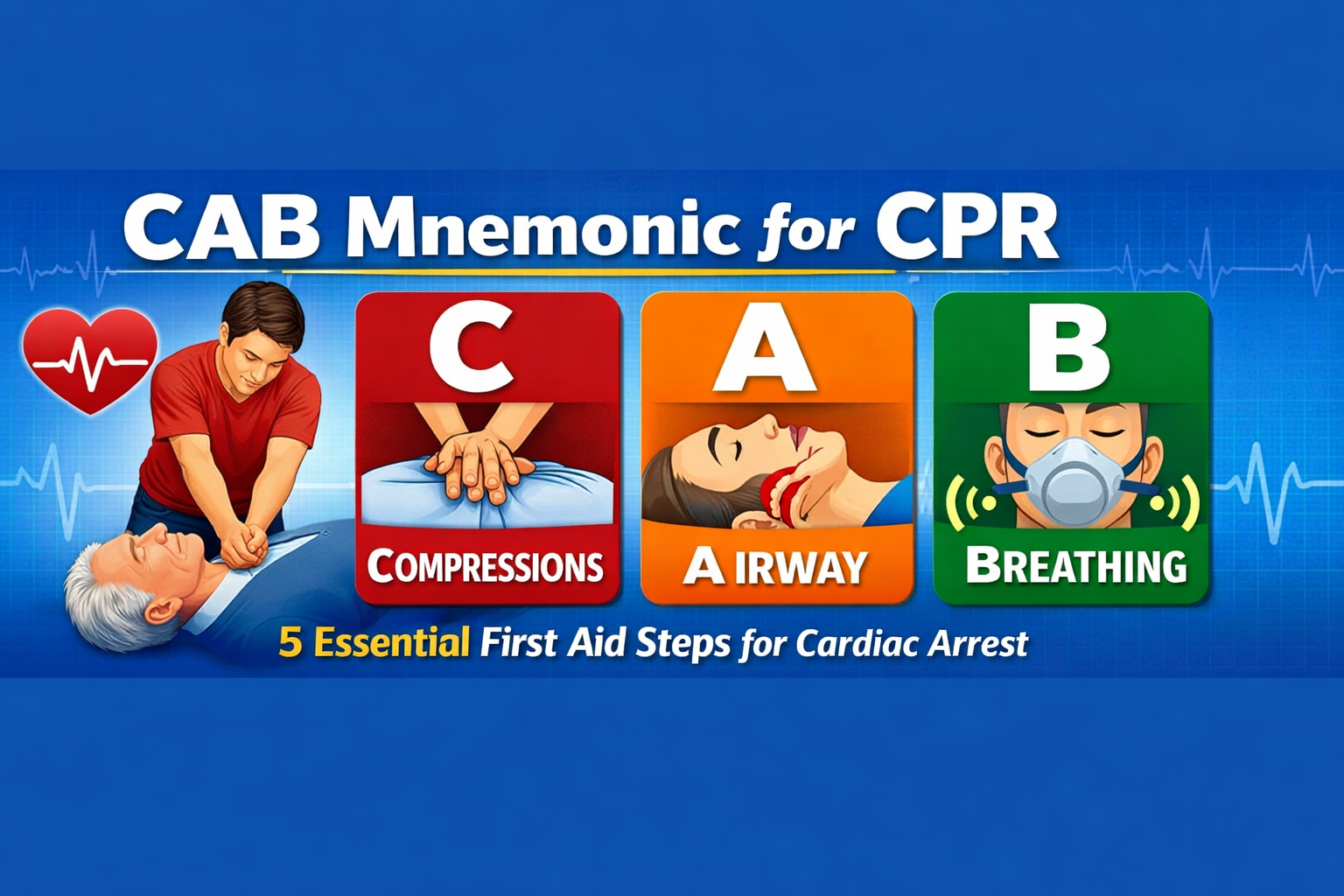
CAB Mnemonic for CPR: 5 Essential First Aid Steps for Cardiac Arrest
CAB Mnemonic
Explanation & Breakdown
CAB Mnemonic for CPR: 5 Essential First Aid Steps for Cardiac Arrest
Medical Disclaimer : This guide is intended for nursing students, those preparing for global licensing exams (such as NORCET, NCLEX, USMLE), and emergency first responders. The Basic Life Support (BLS) sequence discussed complies with standard universal resuscitation guidelines.
What are the CAB mnemonics in first aid?
The CAB mnemonics are a universal sequence used to perform CPR (Cardiopulmonary Resuscitation) during sudden cardiac arrest. It stands for Compressions, Airway, and Breathing. Whenever a patient is unresponsive, not breathing normally, and has no pulse, you should immediately begin the CAB sequence to maintain blood flow to the brain and vital organs.
Step-by-Step Breakdown of the CAB Mnemonic
Medical and nursing exams often test the precise criteria of Basic Life Support. Here is the detailed clinical description:
1. C – Compressions (Push down)
Chest compressions are the most important step. They manually pump blood to the brain and heart.
Technique: Place the heel of one hand in the middle of the chest (on the lower half of the sternum), place the other hand on top, and interlock your fingers.
Rate: Press firmly and rapidly at a rate of 100 to 120 compressions per minute.
Depth: In adults, compress the chest by at least 5 to 6 cm (2 to 2.4 inches).
Ratio: Maintain a strict ratio of 30 compressions to 2 rescue breaths.
2. A – Airway (Keep open)
Once you have completed 30 compressions, you need to open the patient's airway to allow oxygen into the lungs.
Step: Use the head tilt-chin lift method. Place one hand on the patient's forehead and gently tilt the head back while lifting the chin with your fingers.
Note: If a spinal cord injury is suspected, use the jaw thrust method instead.
3. B – Breathing (Give rescue breaths)
After clearing the airway, give rescue breaths.
How to do it: Pinch the patient's nose, take a normal breath, and completely cover the patient's mouth with your own.
Administer: Give 2 rescue breaths. Each breath should last about 1 second.
Check: Observe chest rise. If the chest does not rise, reposition the airway and try again.
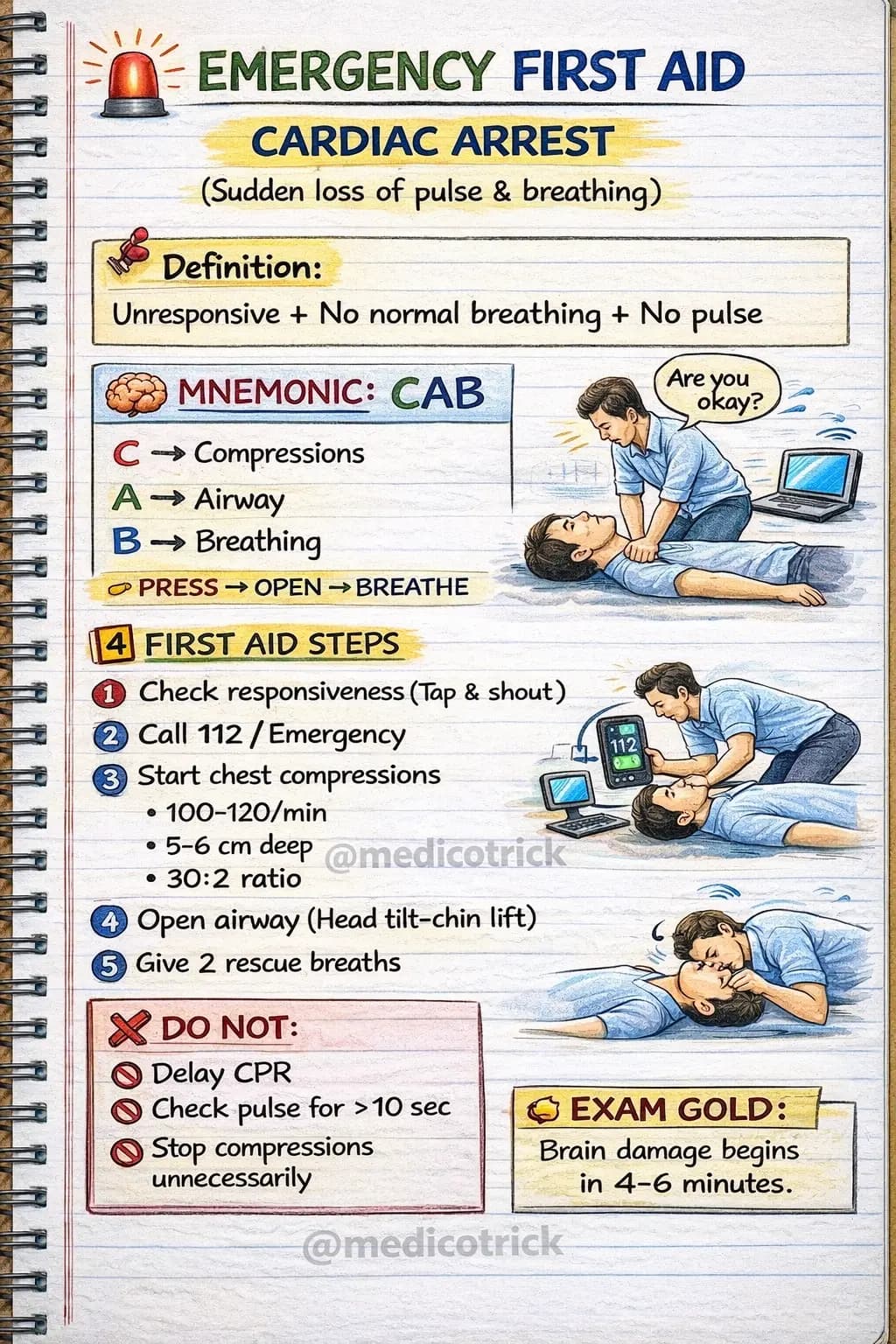
The 5 Golden Points of Emergency First Aid :
Check for a response: Tap the shoulder firmly and shout, “Are you okay?”
Call for help: Immediately dial the emergency number and ask for an AED (Automated External Defibrillator).
Check for breathing and pulse: Observe the chest for signs of breathing and feel the carotid pulse for no more than 10 seconds.
Start CPR: If no pulse is felt, immediately begin chest compressions.
Do not stop: Continue CPR until the AED arrives, advanced medical help takes over, or the patient shows signs of life.
What NOT To Do During CPR:
1. Never delay in giving CPR.
Never check for a pulse for more than 10 seconds.
Never stop compressions unnecessarily, as it greatly reduces the chance of preventing a pause.
⭐ Exam Gold (High-yield clinical topic)
Brain damage begins just 4–6 minutes after cardiac arrest from oxygen deprivation. Within 10 minutes, irreversible brain death can occur. That's why “C” (compression) comes first—to ensure the remaining oxygen in the blood is delivered immediately!
Latest Vacancies
RRC CR GDCE Recruitment 2026: Apply Online for Nursing Superintendent & Other Posts
RRC CR GDCE

DSHM Recruitment 2026: Apply Online for 144+ Medical & Health Vacancies in Delhi
DSHM

BFUHS Nursing Recruitment 2026: Apply Online for 17 Faculty Posts (Advt BFU-26/09)
BFUHS

SSC Staff Nurse Vacancy 2026 (Phase 14): Notification, Eligibility & Apply Link
SSC
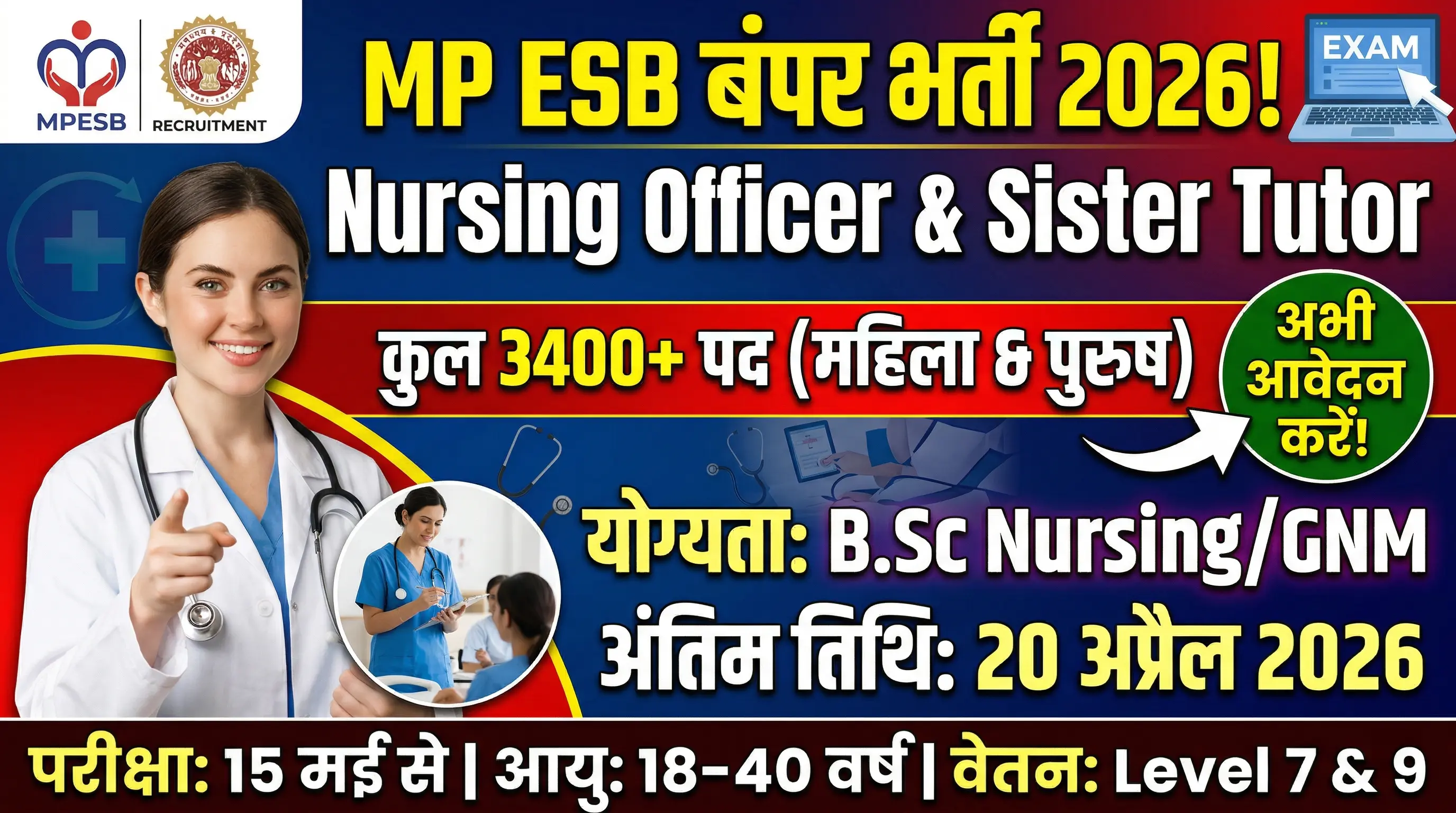
MP ESB Nursing Officer & Sister Tutor Vacancy 2026: Notification, Eligibility, Apply Online
Govt hospital
Recent Mnemonics
Chest Tube Management Tricks & Mnemonics for NCLEX
#Medical Surgical

12 Cranial Nerves Mnemonic Learn in 30 Seconds For Medical Students
#Medical Surgical
100 Surgical Signs Cheat Sheet: Top List + Visual Mnemonics
#Medical Surgical
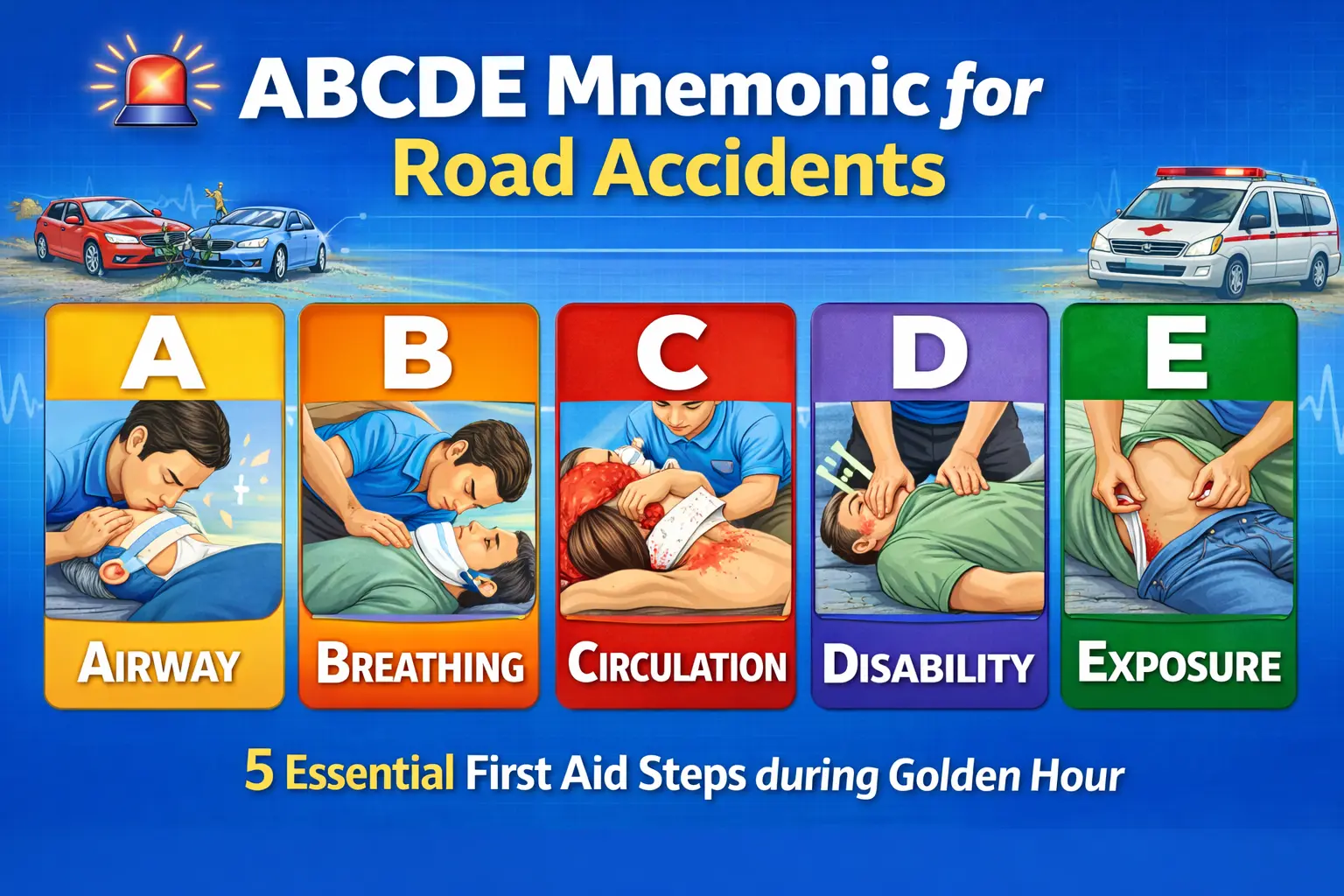
Emergency First Aid Mnemonics: Golden Hour ABCDE Guide for Road Accident Response
#Medical Surgical
Latest Blog Posts

Peppermint Oil for High Blood Pressure: What a Landmark 2026 Study Really Tells You
May 20, 2026
Hantavirus Symptoms 2026: What You Need to Know About the Andes Virus Cruise Ship Outbreak
May 19, 2026

Ebola Outbreak 2026: WHO Declares Global Emergency as Untreatable Strain Crosses Borders
May 19, 2026
RajMES Choice Filling Guidelines 2026: RajHealth Portal पर विकल्प कैसे भरें?
May 8, 2026
Chest Tube Nursing Care Plan (NCP): NANDA Diagnoses & Interventions
May 2, 2026