12 Cranial Nerves Mnemonic Learn in 30 Seconds For Medical Students
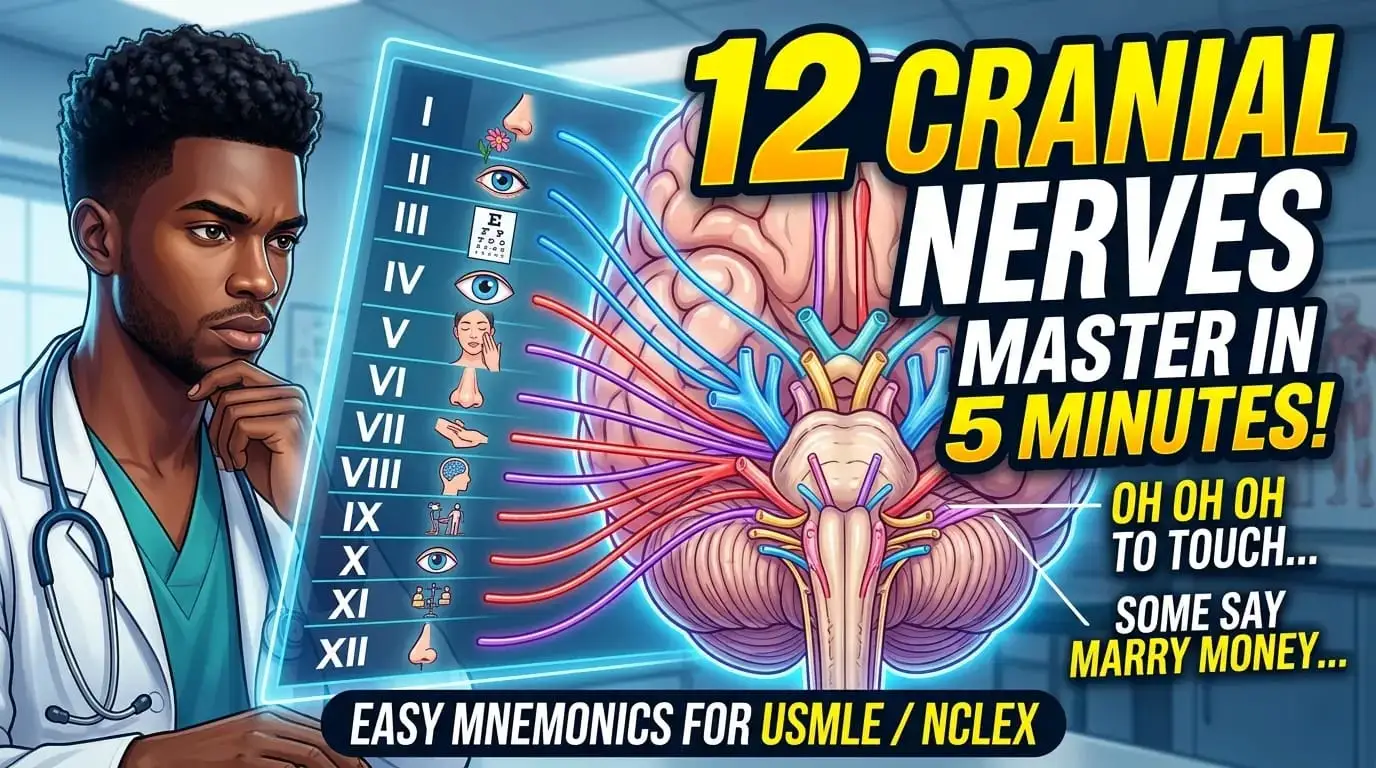
Mnemonic: "Oh Oh Oh To Touch And Feel Very Good Velvet, AH!" Mnemonic: "Some Say Marry Money But My Brother Says Big Brains Matter More"
Explanation & Breakdown
Are you a medical or nursing student struggling to memorize neuroanatomy? You're not alone! Remembering the 12 cranial nerves in order, along with their functions (sensory, motor, or both), is often a nightmare for students.
But don't worry. Welcome to another quick guide from Medicoetrick! Today, we're sharing the easiest trick to learn the cranial nerves in 5 minutes. Whether you're preparing for your university finals, NCLEX, or USMLE, these medical mnemonics will lock the information into your brain permanently.
So let's dive into the best mnemonics for the cranial nerves!
What Are the 12 Cranial Nerves?
Before moving on to the mnemonics for anatomical structures, let's do a quick review. The 12 cranial nerves are a group of nerves that emerge directly from the brain (as opposed to the spinal nerves). They are largely responsible for controlling the sensory and motor functions of your head and neck.
For a complete evaluation of the cranial nerves, you should know the following:
The name of the nerve
Its Roman numeral (I to XII)
Its primary function (Sensory, Motor, or Both)
The Best 12 Cranial Nerves Mnemonic (For Names)
To remember cranial nerves 1–12 in order, we will use one of the world's most famous and effective neuroanatomy tricks.
Mnemonic: "Oh Oh Oh To Touch And Feel Very Good Velvet, AH!"
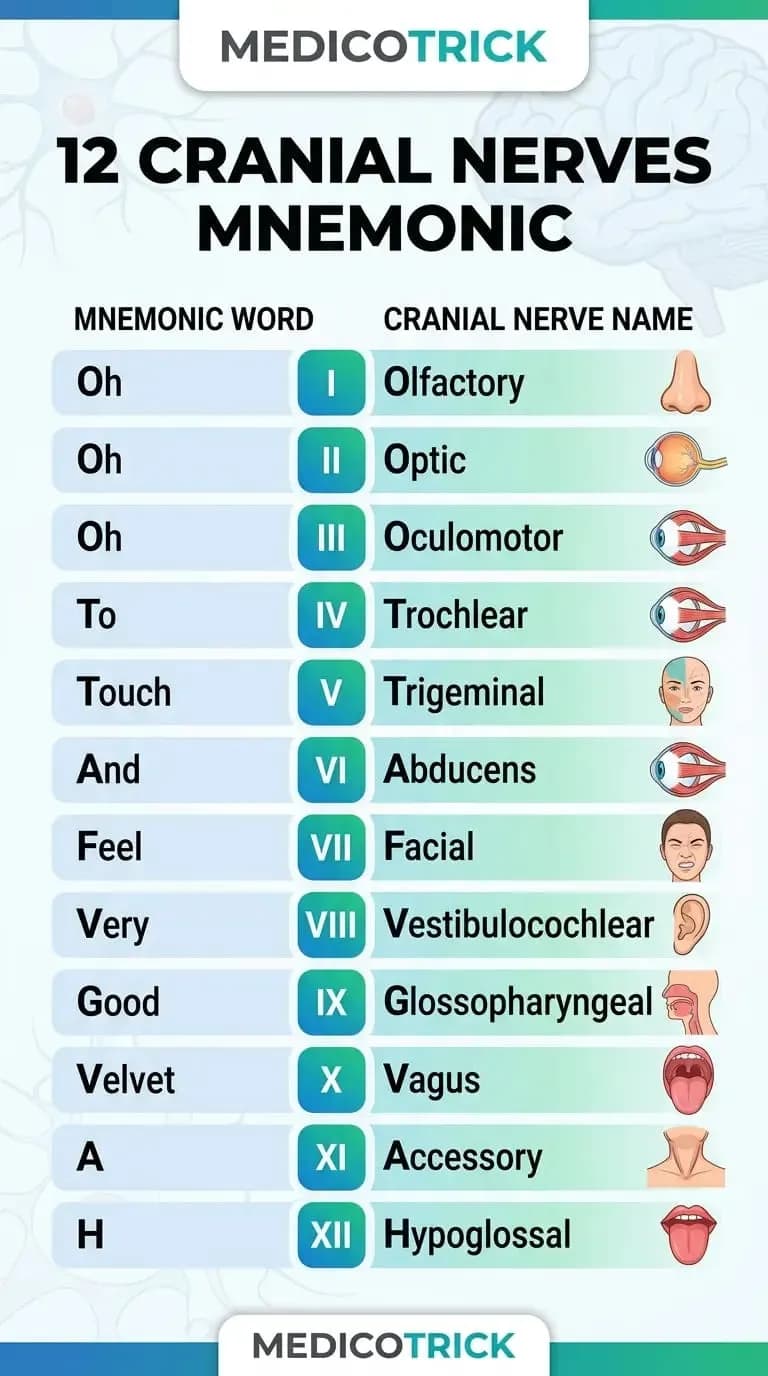
Here is a complete chart detailing the names and functions of the cranial nerves:
Number | Mnemonic Word | Cranial Nerve Name | Primary Function Area |
CN I | Oh | Olfactory | Smell |
CN II | Oh | Optic | Vision |
CN III | Oh | Oculomotor | Eye movement pupil reflex |
CN IV | To | Trochlear | Downward eye movement |
CN V | Touch | Trigeminal | Face sensation chewing |
CN VI | And | Abducens | Outward eye movement |
CN VII | Feel | Facial | Facial expressions taste |
CN VIII | Very | Vestibulocochlear | Hearing balance |
CN IX | Good | Glossopharyngeal | Throat sensation, taste swallowing |
CN X | Velvet | Vagus | Heart rate, digestion organs |
CN XI | A | Accessory | Neck movement |
CN XII | H | Hypoglossal | Tongue movement |
Pro tip: Many students also use “Such Heaven” for the last two letters, which respectively denote the spinal accessory and hypoglossal nerves, but for quick recall “AH!” is much faster.
Sensory, Motor, or Both? (The Function Mnemonic)
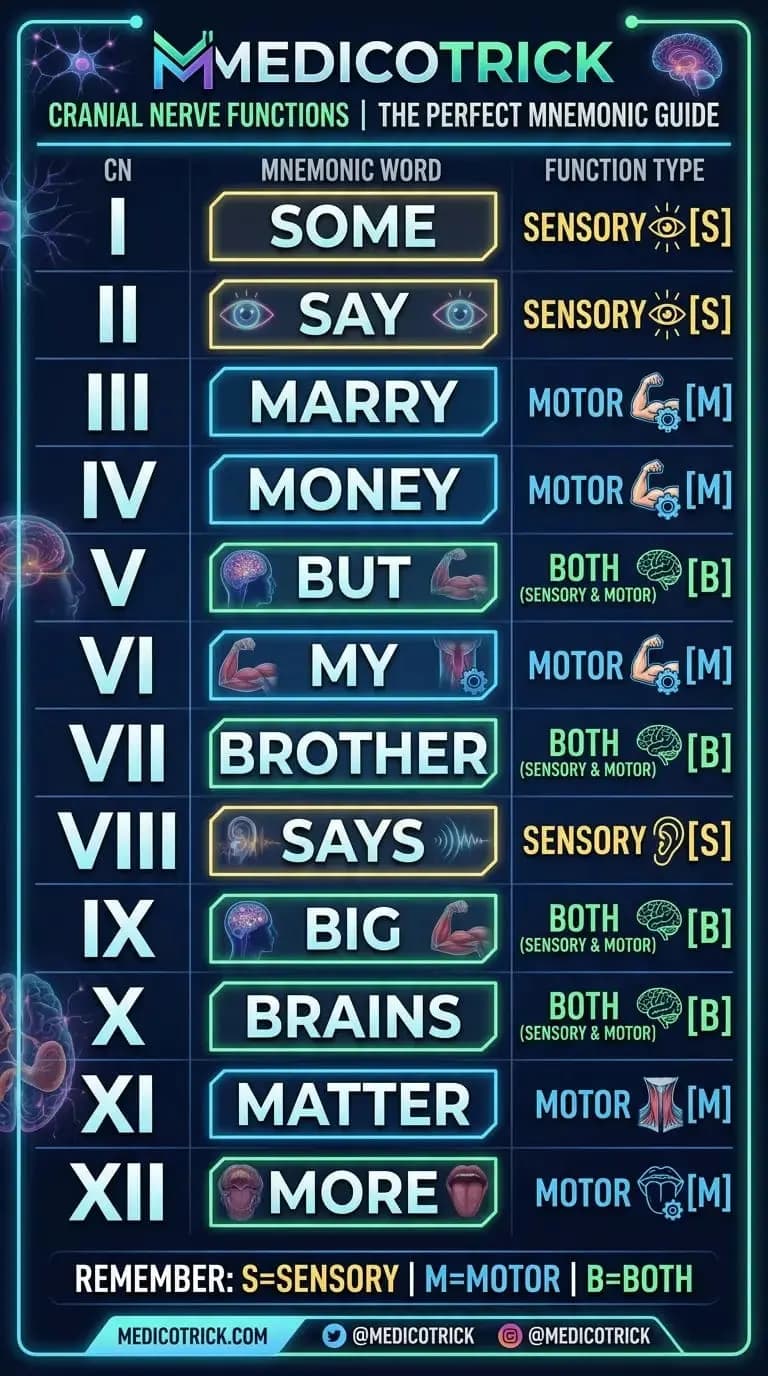
Knowing the name is half the battle won. In exams, they often ask if a nerve is sensory (S), motor (M), or both (B). Here is a good mnemonic for the sensory, motor, and both trick for the 12 cranial nerves:
Mnemonic: "Some Say Marry Money But My Brother Says Big Brains Matter More
CN I: Some (Sensory)
CN II: Say (Sensory)
CN III: Marry (Motor)
CN IV: Money (Motor)
CN V: But (Both)
CN VI: My (Motor)
CN VII: Brother (Both)
CN VIII: Says (Sensory)
CN IX: Big (Both)
CN X: Brains (Both)
CN XI: Matter (Motor)
CN XII: More (Motor)
The Visual Memory Hack (Learn in 30 Seconds!)
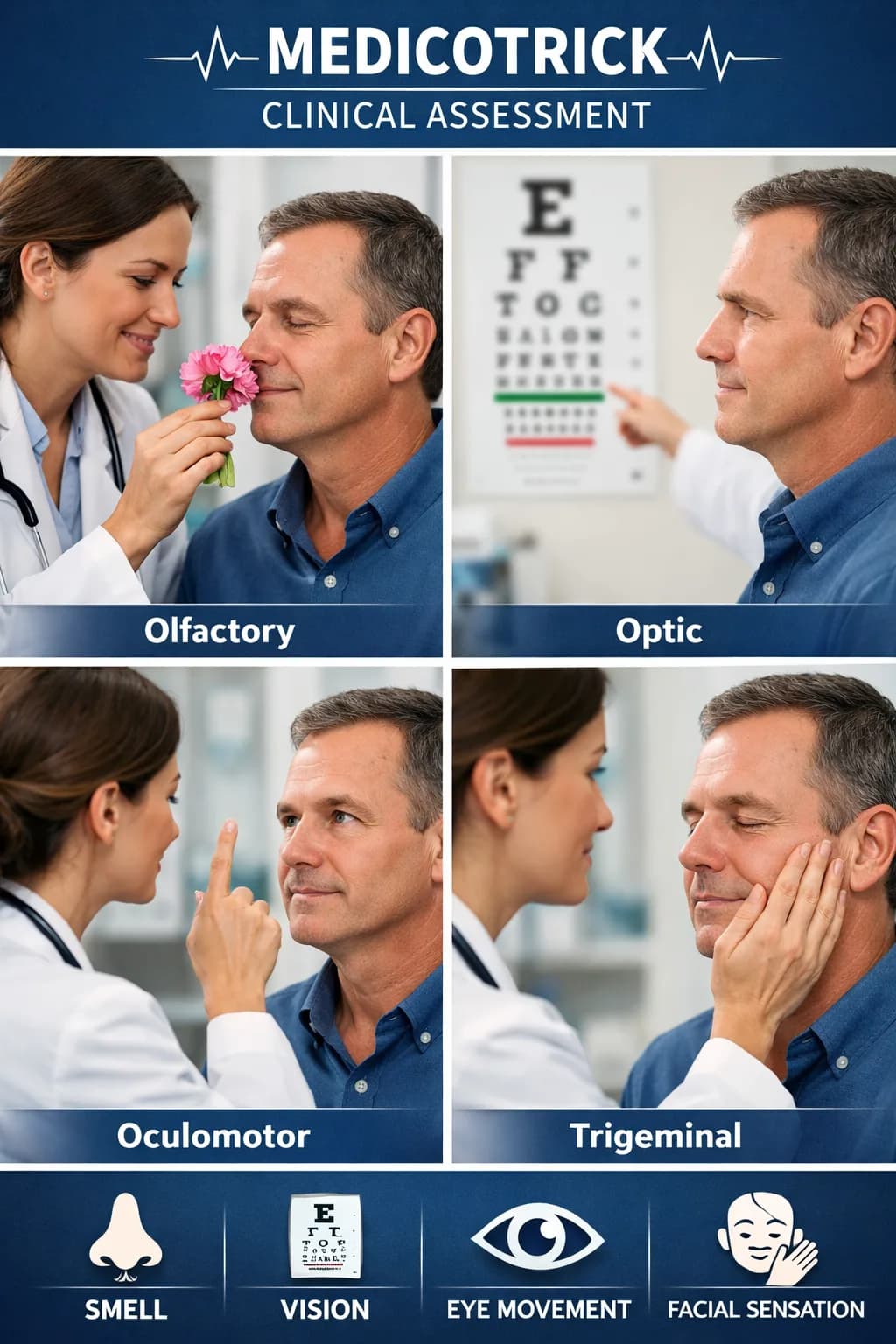
If you are a visual learner, linking the text with imagination is the most powerful mnemonic strategy for nursing anatomy.
Imagine you are performing a clinical assessment on a patient:
First, you ask them to smell a flower (Olfaction)
Then, you check their vision with a chart (vision)
You have them follow your finger with their eyes (ocular)
You gently touch their face to check sensation (trigeminal)
Imagining such an index conjures a mental film, making it impossible to forget the effortless movement of the skull's nerves under high-pressure conditions.
Top Exam Tips: Cranial Nerves Mnemonics for NCLEX / USMLE
If you are a nursing student and are looking for a mnemonic for the cranial nerves for nursing students, focus more on the nerves that are most frequently tested in clinical scenarios:
CN I, II, VIII: Remember that these are purely sensory. If a patient has a hearing problem, you'll immediately know that CN VIII (vestibulocochlear) is involved.
CN X (Vagus nerve): This is the most complex nerve! It controls parasympathetic functions like heart rate and digestion. It is a very frequently asked question on board exams.
CN V and VII: Do not confuse the trigeminal nerve (facial sensation) with the facial nerve (facial expression).
Final Thoughts:
Mastering medical concepts doesn't have to be a headache. By using these medical mnemonics for students, you can recall complex anatomy in just seconds. Be sure to save this page, write these mnemonics in your notebook, and repeat them twice. You'll remember them for life!
Want even simpler notes? Check out the rest of the Medicotric blog for more study hacks, or let us know in the comments below which anatomy topic you want mnemonic for next!
Latest Vacancies
RRC CR GDCE Recruitment 2026: Apply Online for Nursing Superintendent & Other Posts
RRC CR GDCE

DSHM Recruitment 2026: Apply Online for 144+ Medical & Health Vacancies in Delhi
DSHM
BFUHS Nursing Recruitment 2026: Apply Online for 17 Faculty Posts (Advt BFU-26/09)
BFUHS

SSC Staff Nurse Vacancy 2026 (Phase 14): Notification, Eligibility & Apply Link
SSC
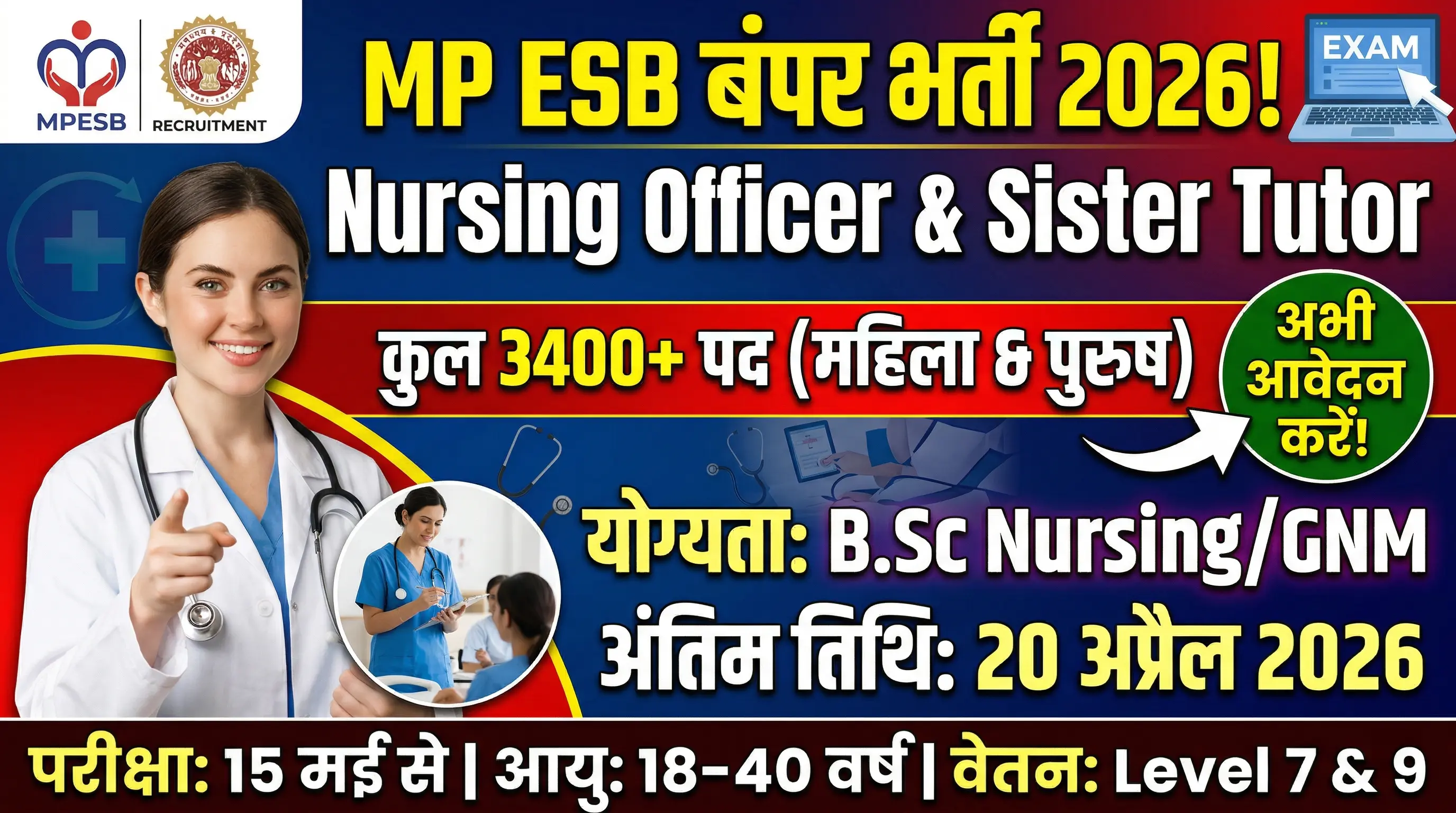
MP ESB Nursing Officer & Sister Tutor Vacancy 2026: Notification, Eligibility, Apply Online
Govt hospital
Recent Mnemonics
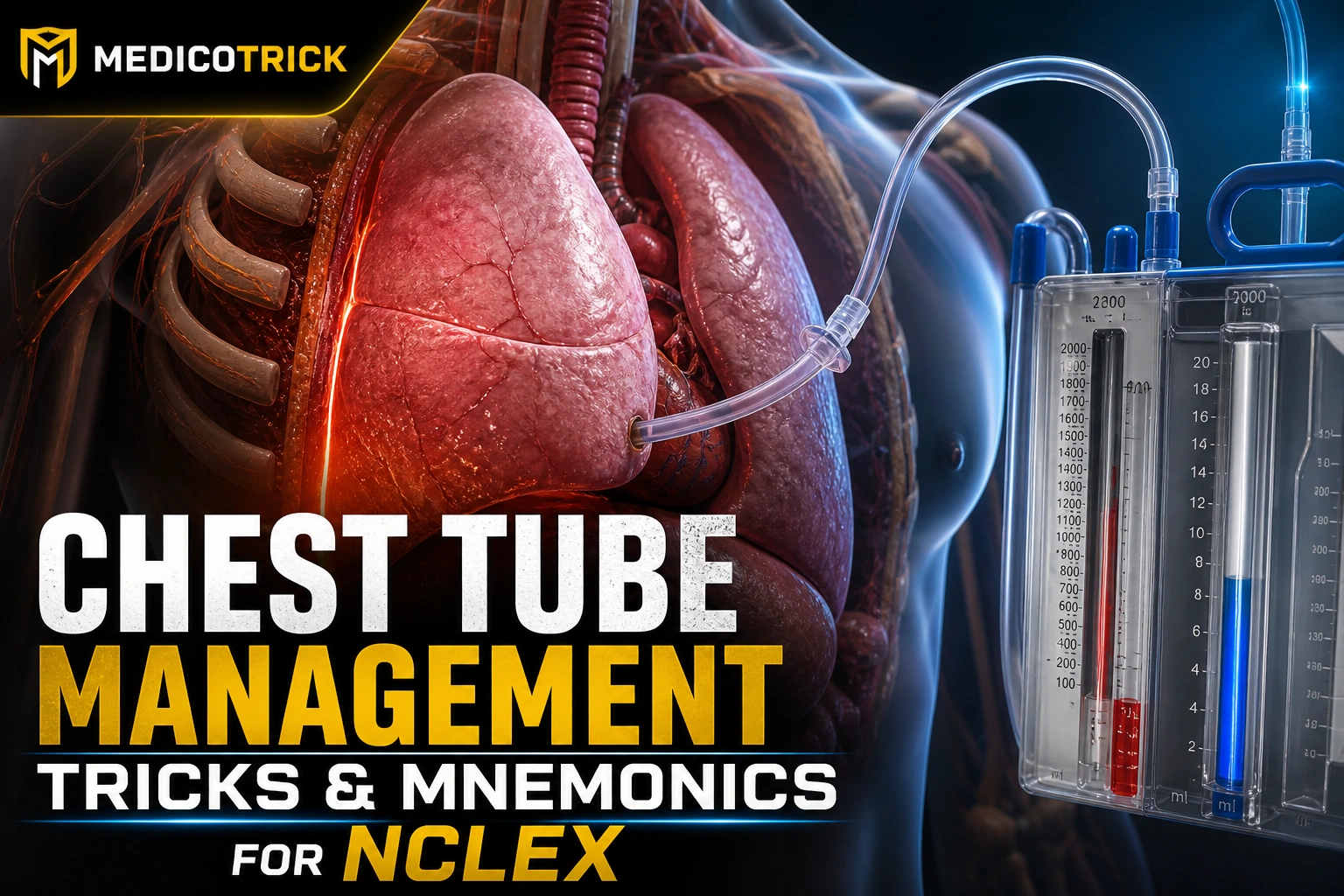
Chest Tube Management Tricks & Mnemonics for NCLEX
#Medical Surgical
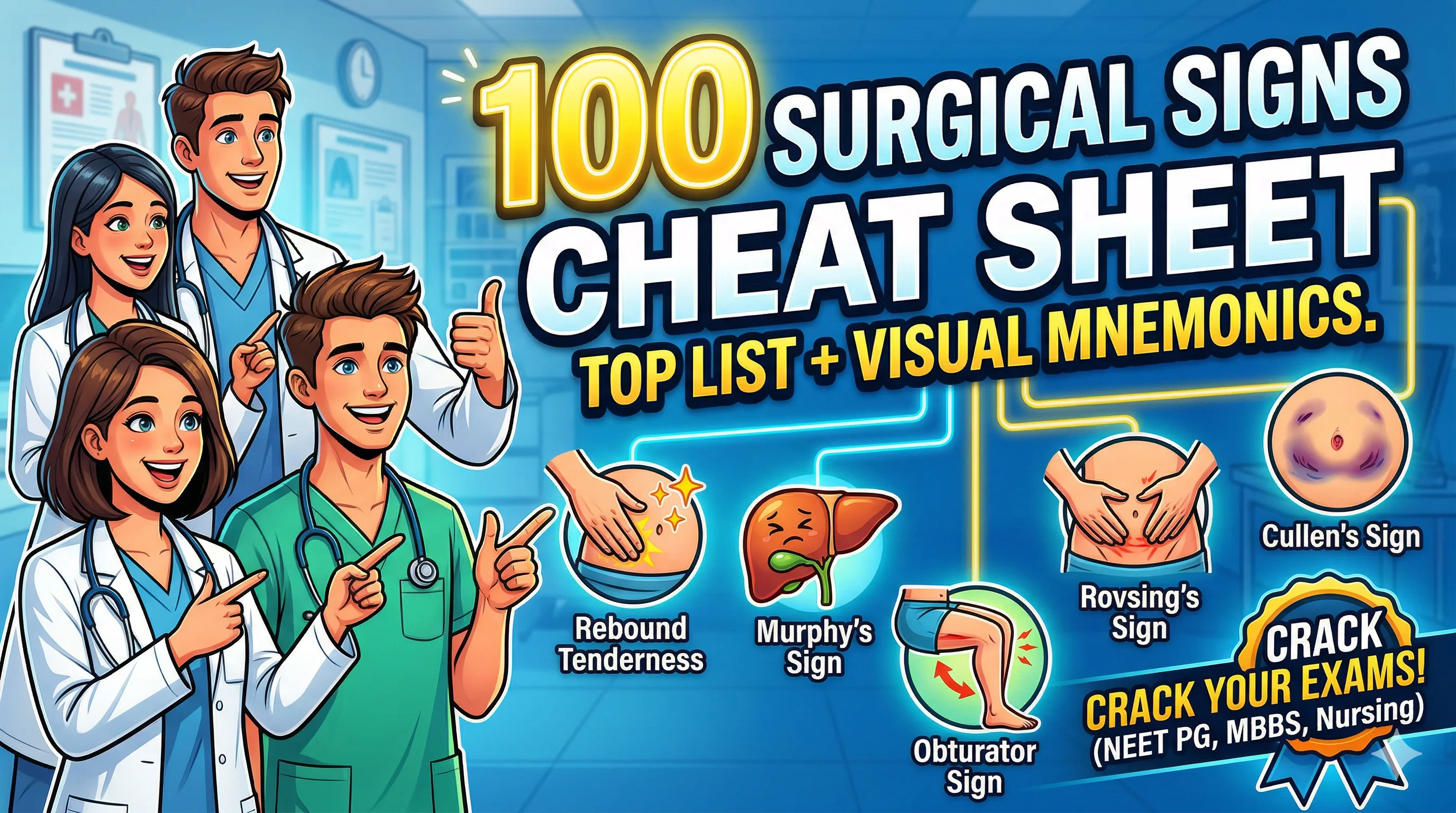
100 Surgical Signs Cheat Sheet: Top List + Visual Mnemonics
#Medical Surgical
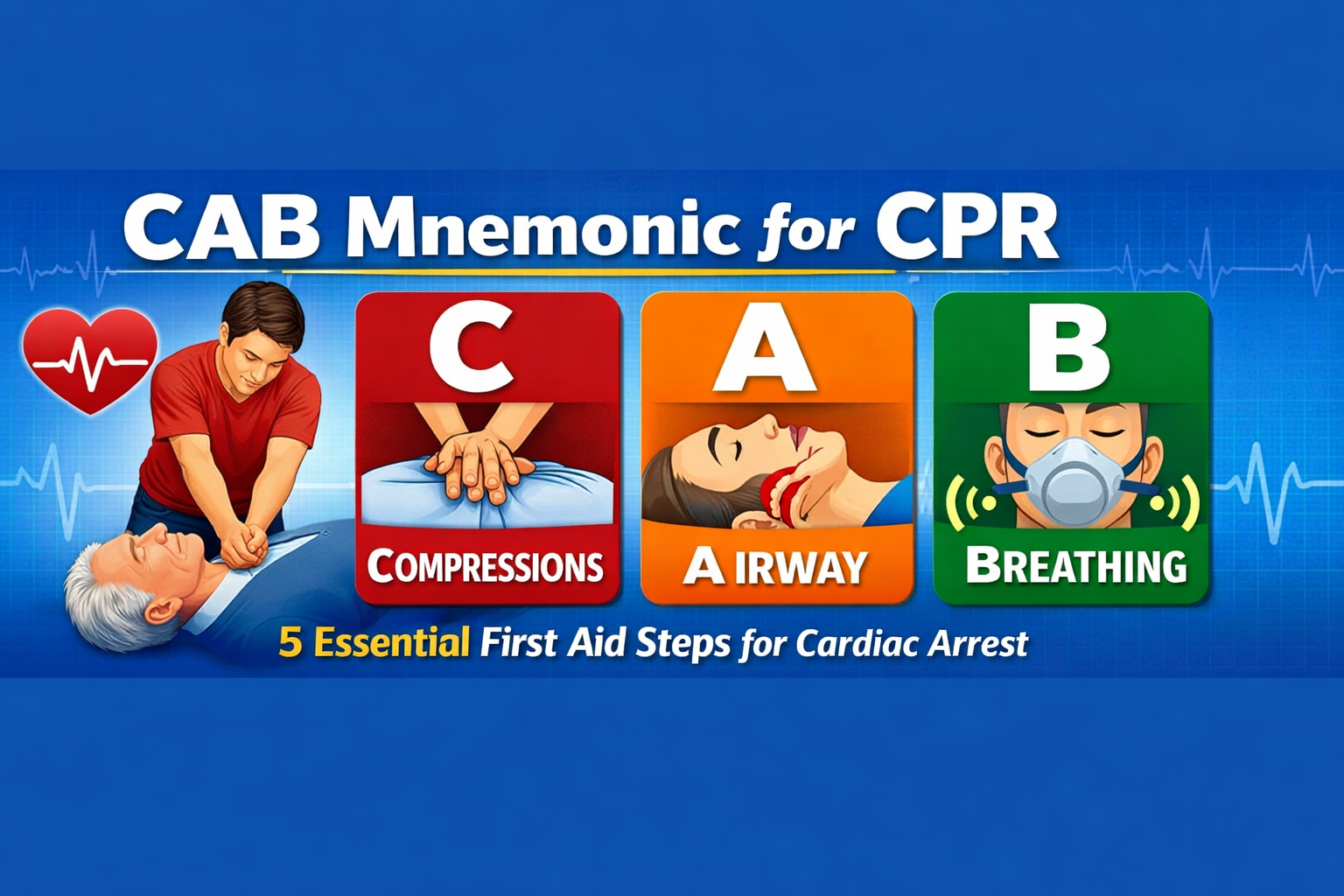
CAB Mnemonic for CPR: 5 Essential First Aid Steps for Cardiac Arrest
#Medical Surgical
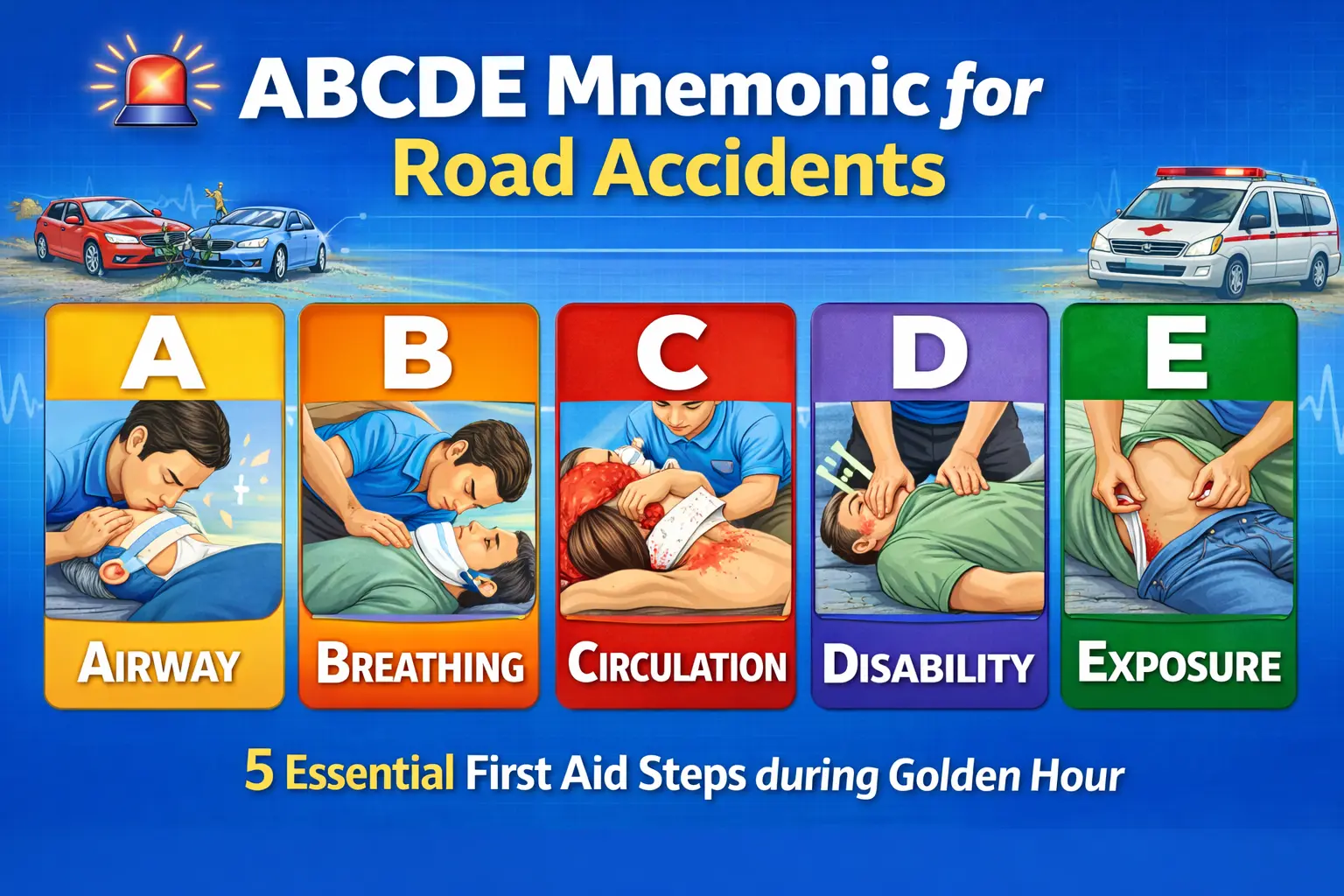
Emergency First Aid Mnemonics: Golden Hour ABCDE Guide for Road Accident Response
#Medical Surgical
Latest Blog Posts

Peppermint Oil for High Blood Pressure: What a Landmark 2026 Study Really Tells You
May 20, 2026
Hantavirus Symptoms 2026: What You Need to Know About the Andes Virus Cruise Ship Outbreak
May 19, 2026
Ebola Outbreak 2026: WHO Declares Global Emergency as Untreatable Strain Crosses Borders
May 19, 2026
RajMES Choice Filling Guidelines 2026: RajHealth Portal पर विकल्प कैसे भरें?
May 8, 2026
Chest Tube Nursing Care Plan (NCP): NANDA Diagnoses & Interventions
May 2, 2026