
Hantavirus Symptoms 2026: What You Need to Know About the Andes Virus Cruise Ship Outbreak
A rare and deadly hantavirus outbreak linked to a cruise ship in the South Atlantic has alerted global health authorities. Here in 2026, this blog covers everything about hantavirus symptoms, how Andes virus spreads, and whether you or your family are at risk.
Quick Facts — Outbreak Status (May 11, 2026)
The Dutch cruise ship MV Hondius has been linked to eight confirmed and suspected hantavirus cases in several countries, including three deaths. The CDC has issued a Level 3 health advisory. The WHO and global health experts have all confirmed that the risk to the general public is low
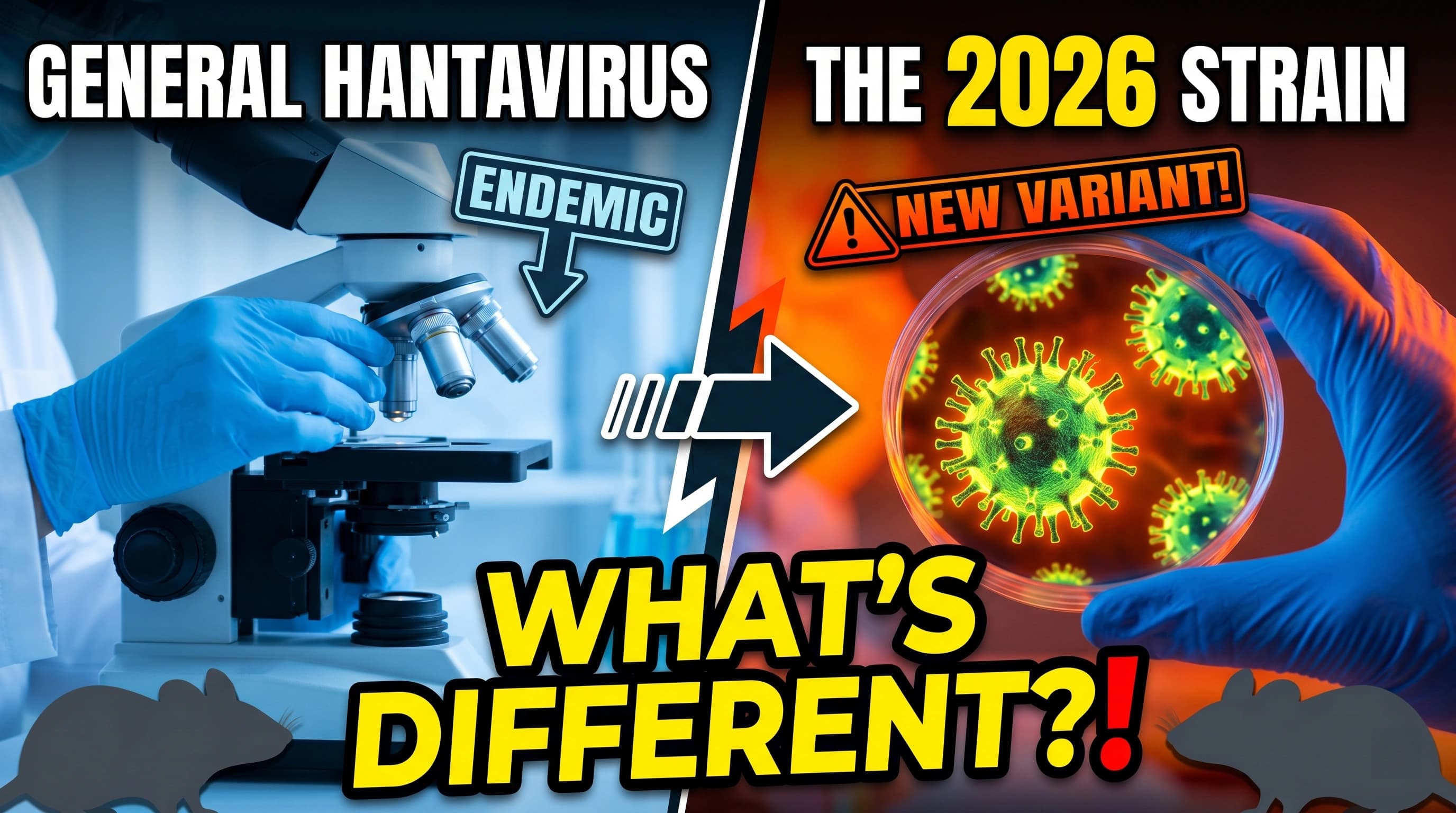
What Is Hantavirus — And What Makes the 2026 Strain Different?
Hantavirus is a group of viruses naturally carried by rodents. In most cases, humans become infected with hantavirus by inhaling airborne particles from the urine, feces, or saliva of infected rodents. The disease is rare but can be extremely severe.
What makes the 2026 outbreak unusual is the specific strain involved: Andes virus. Confirmed by the WHO on May 6, 2026, the Andes virus is the only known hantavirus that is transmitted from person to person — a characteristic that sets it apart from every other strain and explains why health officials are monitoring this outbreak so closely.
The Andes virus is naturally endemic to South America, specifically Argentina and Chile. Investigators believe the index case — a Dutch tourist — likely was exposed to the virus while bird-watching near a landfill outside Ushuaia, Argentina, where rodent species that carry the virus are also present.
Hantavirus Symptoms 2026: What to Watch For
Hantavirus pulmonary syndrome (HPS), caused by the Andes virus, develops in two stages in humans. It is important to recognize the early symptoms — this disease can worsen rapidly.
Phase 1 — Days 1–5 (Early)
Flu-like symptoms that are easy to miss:
• Fever and chills
• Severe muscle aches (thighs, hips, back)
• Fatigue and weakness
• Headache
• Nausea, vomiting, diarrhea
• Abdominal pain
Phase 2 — Days 5–10 (Critical)
Rapid respiratory deterioration:
• Shortness of breath
• Cough with fluid in the lungs
• Pneumonia-like symptoms
• Acute Respiratory Distress Syndrome
• Low blood pressure / shock
• Potential organ failure
Symptoms of HPS caused by the Andes virus can appear between 4 and 42 days after infection, making contact tracing extremely challenging. Early symptoms resemble those of influenza, so delays in diagnosis are common and a recent history of infection is critically important.
Is Hantavirus Contagious? Can It Spread Person to Person?
This is the most searched question about hantavirus in May 2026 — and its answer requires some nuance.
For almost every other strain of hantavirus (including Sin Nombre virus, the type found in North American rodents), the answer is “no” — it does not spread between people. However, Andes virus is a documented exception.
Person-to-person transmission of the Andes virus has been observed in past outbreaks in Argentina and Chile, and is believed to be what is happening in the current cruise ship cluster. However, it requires close, prolonged contact with a symptomatic person for it to spread. This includes:
Direct physical contact with an infected person
Prolonged stay in close or confined spaces
Contact with saliva, respiratory secretions, or other body fluids (kissing, sharing utensils, handling contaminated bed linens)
It does not spread like the flu and COVID-19 through casual contact or brief exposure in open spaces. WHO Director-General Dr. Tedros Adhanom Ghebreyesus made it clear: “This is not another COVID. The current public health risk from hantavirus remains low.”
The 2026 Cruise Ship Outbreak: A Full Timeline
The outbreak began on the MV Hondius, a Dutch-flagged expedition vessel operated by Oceanwide Expeditions. The ship departed from Ushuaia, Argentina, on April 1, 2026, The outbreak began on the MV Hondius, a Dutch-flagged expedition vessel operated by Oceanwide Expeditions. The ship departed from Ushuaia, Argentina, on April 1, 2026,
The first passenger, a 70-year-old Dutch man, developed symptoms in early April and died on board the ship on April 11. His wife, who had been in contact with him, later died in a Johannesburg hospital on April 26. A third passenger, a German national, also died. A doctor on board and several other passengers were also among the confirmed cases, requiring medical evacuation to hospitals across South Africa, the Netherlands, Germany, Switzerland, and Spain.
On May 10, 2026, the ship arrived in Tenerife, Canary Islands, where 94 passengers of 19 nationalities were disembarked. The American passengers were taken to the National Quarantine Unit headquarters, the University of Nebraska Medical Center, for observation.
Hantavirus Death Rate: How Deadly Is It?
According to historical CDC data, the reported case fatality rate for Hantavirus Pulmonary Syndrome is approximately 30–40%. However, infectious disease experts also warn that this figure is likely higher than the true fatality rate, since testing is primarily conducted in severely ill patients. Mild and asymptomatic cases often go completely undetected, which can drive the mortality rate upward.
Currently, there is no approved vaccine and no specific antiviral treatment for hantavirus. Treatment is supportive: rest, hydration, oxygen therapy, and in severe cases, mechanical ventilation. Early hospitalization is crucial as the disease can progress rapidly and unpredictably.
Hantavirus vs COVID: Key Differences
People are naturally comparing the current hantavirus outbreak and the COVID-19 pandemic. Here's why experts say the situations are fundamentally different:
Transmissibility: COVID-19 spreads through brief aerosol contact. Hantaviruses (and Andes virus as well) require close, sustained contact. The basic reproduction number (R0) for Andes virus in human-to-human scenarios has been estimated to be less than 1 under typical circumstances.
Scale of outbreak: As of this writing, the outbreak includes 8 cases. The COVID-19 pandemic was declared after tens of thousands of cases in dozens of countries.
Structural Risk: Hantaviruses lack a global chain of quiet, asymptomatic spreaders that establish community transmission — which was critical for the rapid global spread of COVID.
How Do You Get Hantavirus? Prevention Tips
For most people worldwide, the risk of hantavirus comes from contact with rodents—not from other people. Here's how to protect yourself:
Avoid contact with rodents: do not touch live or dead rodents. If you find rodent droppings in your home or workplace, do not sweep or vacuum (this can spread virus particles into the air). Instead, wear gloves, dampen the area with a disinfectant, and wipe it clean.
Seal your home: Seal any cracks or holes that rats can use to enter your home, especially in storage areas, garages, and basements.
Ventilate before entering: If you're opening a cabin or shed that has been closed for months, open the windows and doors and let it air out for at least 30 minutes before entering.
For those traveling to South America: Andean viruses are endemic in parts of Argentina, Chile, Bolivia, Uruguay, and Paraguay. Avoid contact with wild rodents. If you develop a fever, muscle aches, or respiratory symptoms within 6 weeks of returning, be sure to inform your doctor of your travel history.
For close contacts of confirmed cases: Follow the instructions of local public health authorities. The CDC recommends monitoring for symptoms for 42 days after the last potential contact.
Should You Be Worried? A Realistic Assessment
For most people reading this article, the honest answer is: no, you don't need to panic. This isn't a dismissal—it's the evidence-based assessment shared by the World Health Organization (WHO), the CDC, and infectious disease experts around the world.
The hantavirus outbreak on the MV Hondius is a serious incident that requires careful management. Three people have died, and more cases may emerge among passengers and close contacts. It demands respect and a rigorous public health response.
But this virus does not spread through ordinary contact, it has not established community transmission anywhere in the world, and it does not have the silent, pre-symptomatic spread that made COVID-19 so difficult to control. Monitor credible sources like the CDC and WHO, seek immediate medical attention if you have been potentially exposed and develop symptoms, and for now — live your life as normal.