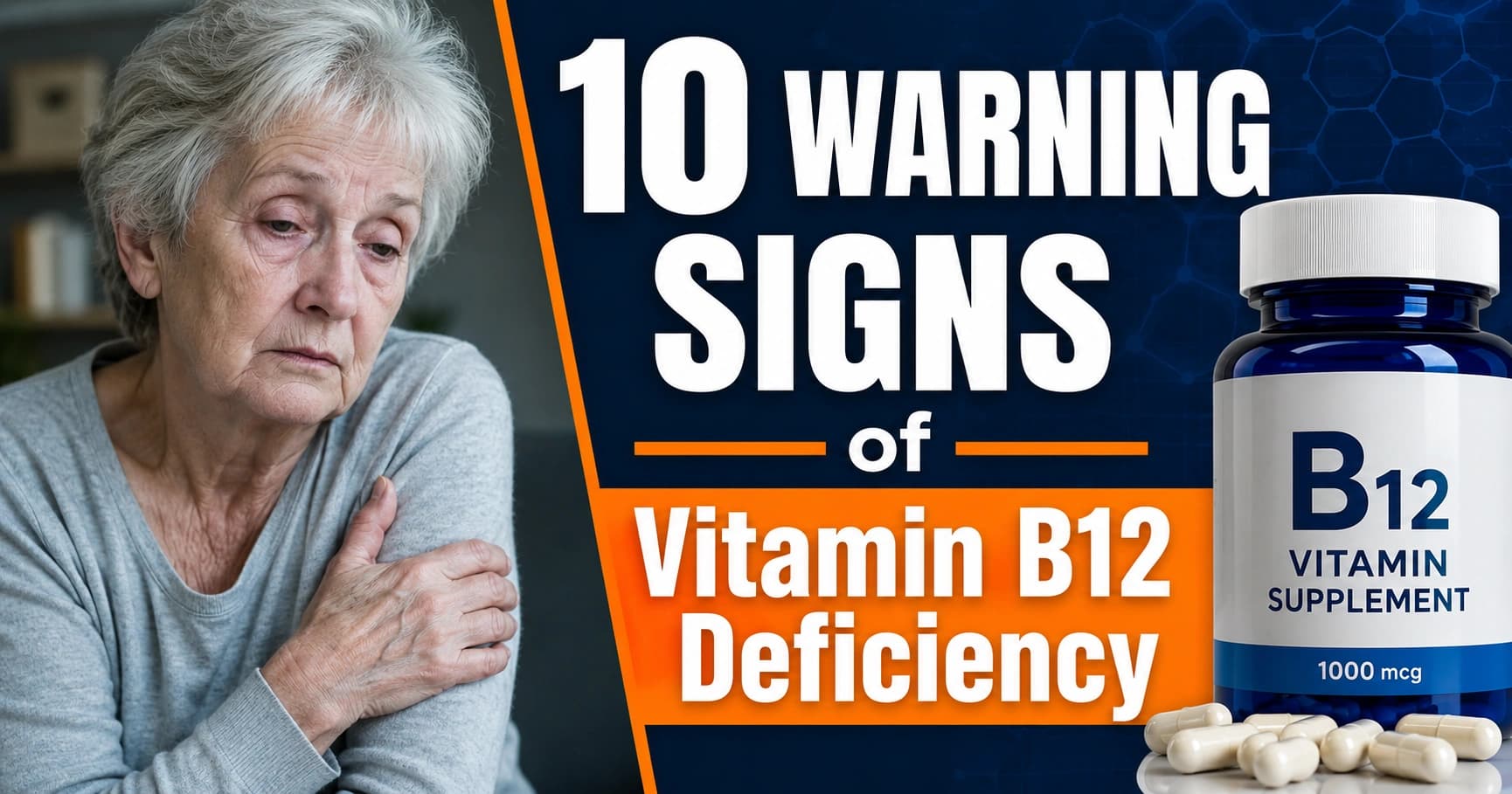
Vitamin B12 Deficiency: 10 Warning Signs You Must Never Ignore
Something alarming is happening inside millions of bodies right now — and most people don't even know it.
A tiny vitamin. Smaller than a grain of table salt in terms of daily required. Yet its absence is quietly destroying nerve cells, scrambling brain function, causing crippling fatigue, and triggering conditions that doctors too often mistake for normal aging.
That vitamin is Vitamin B12 — also known as cobalamin.
In 2026, scientists are calling B12 deficiency a silent epidemic. Research now suggests that up to 20% of older adults may have insufficient levels — and millions more in their 30s, 40s, and 50s are heading in the same direction without realizing it.
The most dangerous part? The symptoms creep in slowly. By the time most people notice, significant damage may already have been done.
This article will give you everything you need to know — the 10 warning signs, who is most at risk, the best time to take your supplement, the top foods to eat, and the one mistake doctors keep making when diagnosing B12 deficiency.
What Is Vitamin B12 and Why Does Your Body Desperately Need It?
Vitamin B12 is a water-soluble vitamin that your body cannot produce on its own. It must come entirely from diet or supplementation.
Despite being required in microscopic amounts — just 2.4 micrograms per day for most adults — B12 is involved in some of the most critical biological processes in your body:
Red blood cell production — Without B12, your bone marrow produces large, malformed red blood cells that cannot carry oxygen efficiently.
DNA synthesis — Every time a cell divides in your body, B12 is needed to copy DNA correctly.
Nervous system protection — B12 maintains the myelin sheath, the protective coating around nerve fibers. When this breaks down, nerve signals are disrupted.
Brain and cognitive function — B12 is directly involved in producing neurotransmitters like serotonin and dopamine.
Energy metabolism — B12 helps your mitochondria convert food into ATP, the energy currency of every cell.
Homocysteine regulation — B12 converts the amino acid homocysteine into methionine. Without this, homocysteine builds up in the blood — a known risk factor for heart disease, stroke, and dementia.
The discovery of B12's role in treating pernicious anemia — once a fatal disease — earned George Minot and William Murphy the Nobel Prize in Medicine in 1934. As 2026 marks the centenary of their landmark research, scientists are once again shining a spotlight on how dangerously underdiagnosed this deficiency still is.
Why Is B12 Deficiency So Common Right Now?
Several factors are driving B12 deficiency to epidemic levels in 2026:
1. An aging population. As you get older, your stomach produces less acid. That acid is what releases B12 from food proteins so it can be absorbed. Without sufficient stomach acid, even a diet rich in B12-containing foods won't be enough.
2. The rise of plant-based diets. Vitamin B12 is found almost exclusively in animal products — meat, fish, eggs, and dairy. Vegans and vegetarians who don't supplement are at severe risk.
3. Widespread medication use. Two of the most commonly prescribed medications in the world — Metformin (for type 2 diabetes) and Proton Pump Inhibitors or PPIs (for acid reflux, like omeprazole) — both significantly reduce B12 absorption. Millions of people take these drugs for years without ever being told to monitor their B12 levels.
4. Weight loss surgeries. Gastric bypass and sleeve gastrectomy surgeries alter the part of the digestive tract where B12 is absorbed.
5. Autoimmune gastritis. This condition destroys the stomach cells that produce intrinsic factor — a protein without which B12 cannot be absorbed at all. This is the root cause of classic pernicious anemia.
6. "Normal" lab results that are actually abnormal. A landmark UCSF-led study published in 2026 found that older adults showing neurological and cognitive symptoms had B12 levels that were technically within the "normal" range — but were still functionally insufficient. Scientists are now calling for a complete overhaul of how we define B12 deficiency.
Read More:- The Hidden Crisis of Weight Loss Drugs
10 Warning Signs of Vitamin B12 Deficiency You Should Never Ignore
The symptoms below develop gradually — sometimes over months or years. Many are easily dismissed as stress, aging, or overwork. Don't make that mistake.
1. Extreme Fatigue and Weakness That Sleep Doesn't Fix
This is the most common symptom. When your body lacks B12, your red blood cells become large and dysfunctional. They struggle to carry oxygen to your tissues. The result is a bone-deep tiredness that no amount of rest can cure — because the problem isn't lack of sleep, it's lack of oxygen delivery at the cellular level.
2. Tingling, Numbness, or Pins-and-Needles in Hands and Feet
This is one of the most telling neurological signs. B12 is essential for maintaining the myelin sheath around your nerve fibers. When B12 is low, myelin breaks down and nerve conduction is disrupted — producing sensations of tingling, numbness, or electric-shock feelings, especially in the extremities.
This symptom, if ignored for long enough, can become permanent.
3. Brain Fog, Poor Memory, and Difficulty Concentrating
People describe this as feeling like their brain is "wrapped in cotton wool." Tasks that were once effortless become mentally exhausting. You forget words mid-sentence. You lose track of what you were saying. You feel mentally slow, foggy, and scattered.
The UCSF study (2026) showed that even B12 levels within the "normal" range were associated with measurable cognitive impairment in older adults — a finding that is reshaping how neurologists approach this deficiency.
4. Mood Changes — Depression, Anxiety, and Irritability
B12 is directly involved in synthesizing serotonin, dopamine, and other mood-regulating neurotransmitters. Low B12 disrupts the methylation cycle, which affects everything from hormone balance to emotional regulation.
Research published in PMC documents a case of severe psychotic depression in an elderly woman that failed to respond to conventional psychiatric medications — but resolved dramatically once B12 deficiency was identified and treated.
5. Balance Problems and Difficulty Walking
Damage to the nerve pathways in the spinal cord — a condition called subacute combined degeneration — is a serious complication of untreated B12 deficiency. Patients describe difficulty walking in a straight line, unsteadiness, or a feeling that the floor is moving. Geriatricians consider unexplained balance problems or walking difficulties in elderly patients as a red flag for B12 deficiency.
6. Pale or Slightly Yellowish Skin
When your red blood cells are damaged and breaking down faster than normal (a process called hemolysis), the excess breakdown product — bilirubin — can give your skin and eyes a faint yellowish tint. At the same time, poor red blood cell production leaves the skin looking pale and washed out.
7. Glossitis and Mouth Ulcers
Inflammation of the tongue — called glossitis — is a classic early sign of B12 deficiency. The tongue becomes swollen, red, and smooth (losing its normal bumpy texture), and may feel sore. Recurring mouth ulcers and a burning sensation in the mouth are also associated symptoms.
8. Shortness of Breath on Minimal Exertion
When your blood cannot carry enough oxygen due to poorly functioning red blood cells, your heart and lungs have to compensate by working harder. This leads to breathlessness during activities that previously felt effortless — climbing stairs, walking quickly, or even light housework.
9. Vision Problems and Disturbances
B12 deficiency can damage the optic nerve, leading to a condition called optic neuropathy. Symptoms include blurred or double vision, sensitivity to light, or gradual vision loss. The UCSF research specifically noted that visual tests helped detect B12-related neurological damage even in patients with "normal" blood test results.
10. Elevated Homocysteine — A Hidden Cardiovascular Danger
This symptom has no outward signs — but it is one of the most dangerous consequences of B12 deficiency. Without adequate B12 (and folate), homocysteine accumulates in the bloodstream. Elevated homocysteine is strongly linked to an increased risk of:
Heart attack
Stroke
Cognitive decline and dementia
Depression
This is why B12 deficiency is not just a nutritional problem — it is a cardiovascular and neurological risk factor that deserves urgent attention.
Read More:- Peppermint Oil for High Blood Pressure
Who Is Most at Risk? (Check This List Carefully)
You are at significantly elevated risk of B12 deficiency if you:
Are over 50 years old (stomach acid production naturally declines with age)
Are over 75 (more than 10% of this age group are deficient, per NICE guidelines)
Follow a vegan or vegetarian diet without supplementing
Take Metformin for type 2 diabetes
Take PPIs (omeprazole, lansoprazole, pantoprazole, etc.) for acid reflux
Have had gastric bypass or bariatric surgery
Have been diagnosed with autoimmune gastritis, Crohn's disease, or celiac disease
Have a history of Helicobacter pylori infection
Drink alcohol heavily
Are pregnant or breastfeeding (demand increases significantly)
Have a family history of pernicious anemia
Read more:- Urgent FDA Warning: Over 3 Million Eye Drops Recalled at CVS, Walgreens, and Rite Aid Over Safety Concerns
The Critical Mistake Doctors Are Still Making in 2026
Here is something that could change your life — or a loved one's:
The standard blood test for B12 is not enough.
Most labs flag a B12 level below 200 pg/mL as "deficient." But multiple studies — including the 2026 UCSF research — now show that people can experience significant nerve damage and cognitive impairment at levels between 200–400 pg/mL, which is technically "normal."
A more complete workup should include:
Serum Vitamin B12 — the basic test
Methylmalonic Acid (MMA) — rises when B12 is functionally insufficient, even if blood levels appear normal
Homocysteine — elevated when B12 and folate are low
Complete Blood Count (CBC) — to check for megaloblastic anemia
If you have neurological symptoms — tingling, memory problems, balance issues — and your doctor says your B12 is "fine," ask specifically for MMA and homocysteine testing.
As the UCSF researchers stated: "Clinicians should consider supplementation in older patients with neurological symptoms even if their levels are within normal limits."
The Best Foods to Boost Vitamin B12 Naturally
B12 is found primarily in animal-derived foods. Here are the richest sources:
Food | Approximate B12 Content |
|---|---|
Beef liver (3 oz) | 70–80 mcg |
Clams (3 oz) | 84 mcg |
Salmon (3 oz) | 4.9 mcg |
Tuna (3 oz) | 2.5 mcg |
Beef (3 oz) | 1.4–2.4 mcg |
Milk (1 cup) | 1.2 mcg |
Yogurt (1 cup) | 1.1 mcg |
Eggs (2 large) | 0.6 mcg |
Fortified cereals | 1.5–6 mcg (varies) |
Note: If you are vegan, vegetarian, or over 50, dietary sources alone are often insufficient. Supplementation is not optional — it is necessary.
What Type of B12 Supplement Is Best?
Not all B12 supplements are equal. Here's what you need to know:
1. Cyanocobalamin — Synthetic form. Stable, inexpensive, and widely available. The body must convert it to an active form. Works well for most people.
2. Methylcobalamin — The naturally occurring, bioactive form. Does not need conversion. Preferred for people with MTHFR gene variants, older adults, and those with absorption issues.
3. Adenosylcobalamin — The form stored in mitochondria. Often combined with methylcobalamin in premium supplements.
Sublingual (under-the-tongue) tablets are strongly recommended for people over 50, those on PPIs or Metformin, and anyone with absorption issues — because they bypass the digestive system and are absorbed directly into the bloodstream through the mucous membranes.
The Best Time to Take Vitamin B12 for Maximum Absorption
This is one of the most searched questions on Google, Quora, Pinterest, and health platforms — and for good reason. Timing genuinely matters.
Take B12 in the Morning
The consensus across current research and clinical guidance is clear: morning is the optimal time to take Vitamin B12.
Here's why:
Absorption peaks in the morning. Stomach acid levels are naturally higher in the morning. Since crystalline B12 in supplements needs stomach acid for optimal processing, morning dosing aligns with your body's digestive rhythms.
B12 has a mildly stimulating effect. It supports the conversion of food into cellular energy (ATP), boosts neurotransmitter production, and enhances mental clarity. Taking it in the morning gives you the energy and focus boost when you actually need it.
Evening dosing may disrupt sleep. B12 can interfere with melatonin production — the hormone that signals your body to sleep. Several studies have noted that sensitive individuals experience sleep disruption or vivid dreams when taking B12 at night. Avoid taking it after 2–3 PM.
Morning vs. food: B12 supplements (in their free, crystalline form) do not require food to be absorbed — unlike food-bound B12. You can take them on an empty stomach with water. However, if you experience any stomach discomfort, taking them with a light meal is perfectly fine.
One important rule: Wait at least 30 minutes after taking B12 before drinking coffee or tea. Tannins and polyphenols in these beverages can interfere with absorption.
Summary: B12 Timing Rules
Take in the morning — ideally 30 minutes before breakfast
Can also be taken with breakfast if preferred
Water is sufficient — no fat needed (B12 is water-soluble)
Avoid taking after 3 PM
Avoid coffee/tea for 30 minutes after dosing
Do NOT take at night if you have sleep sensitivity
What Dose of B12 Do You Actually Need?
Group | Recommended Daily Intake |
|---|---|
Adults (general) | 2.4 mcg/day |
Adults over 50 | 2.4 mcg/day (but often need higher from supplements) |
Pregnant women | 2.6 mcg/day |
Breastfeeding women | 2.8 mcg/day |
Vegans/vegetarians | 250–500 mcg/day (supplement) |
Adults with absorption issues | 1,000–2,000 mcg/day (high-dose oral) |
Pernicious anemia | Injections as prescribed by a physician |
Good news: B12 is water-soluble and non-toxic. Your body excretes what it does not need through urine. There is no established upper limit for B12, and there is no risk of toxicity from high doses.
Can B12 Deficiency Cause Permanent Damage?
Yes — and this is the most important thing to understand.
Nerve damage caused by B12 deficiency can become irreversible if left untreated for too long. The myelin sheath around nerve fibers, once severely degraded, may not fully repair.
The good news: when caught early, B12 deficiency is one of the most treatable nutritional disorders in medicine. Supplementation — whether through high-dose oral tablets, sublingual drops, or injections — can reverse most symptoms within weeks to months, provided damage has not already become permanent.
This is why early detection and regular testing matters so much — especially for anyone over 50, on long-term medication, or following a plant-based diet.
When to See a Doctor Immediately
Seek prompt medical attention if you experience:
Sudden or worsening numbness in limbs
Difficulty walking or serious balance problems
Significant memory loss or confusion
Extreme, persistent fatigue combined with shortness of breath
Any combination of the 10 symptoms listed above
A simple blood test ordered by your doctor can confirm or rule out B12 deficiency within days. Treatment is safe, affordable, and effective.
Final Word: The Vitamin That Doctors Keep Missing
Vitamin B12 deficiency is not rare. It is not dramatic. It does not announce itself loudly. It whispers — through fatigue, through tingling fingers, through foggy thoughts, through unsteady steps.
And by the time it shouts, serious damage may already be done.
The science in 2026 is clearer than ever: current guidelines for what counts as "normal" B12 may not be enough, especially for older adults. The standard lab test may miss early functional deficiency. Neurological symptoms can precede any abnormality on a blood test.
The solution is simple: know your risk factors, recognize the early signs, eat B12-rich foods, supplement intelligently (in the morning, with methylcobalamin if possible), and get tested regularly — especially if you're over 50, on PPIs or Metformin, or eating a plant-based diet.
This small vitamin — needed in amounts smaller than a grain of salt — could be the difference between a sharp, energetic, healthy life and a slow, preventable decline.
Don't wait for the damage to be done.
This article is for educational purposes only and is not a substitute for professional medical advice. Always consult your healthcare provider before starting any supplementation regimen.