The 2026 Protein Craze Is Real — But Here's How Much You Actually Need (And When More Becomes Dangerous)
Protein has become the defining buzzword of the modern wellness era : stamped on cereal boxes baked into bread, swirled into sparkling water. But as supermarket shelves groan under the weight of high-protein everything nutrition scientists are asking a more inconvenient question: are we obsessing over a nutrient most of us already get enough of?
The Protein Takeover Is Real — But Is It Necessary?
Walk any supermarket aisle in 2026 and you'll notice something remarkable. Protein is everywhere — in breakfast cereals, Greek yogurt & sparkling water and even sliced bread. Food journalist Teodora Lyubomirova reports that protein has become the ultimate value-added ingredient with demand continuously rising as consumers associate it with health satiety & muscle support while manufacturers view it as a way to differentiate their products.
A recent survey by the International Food Information Council found that protein is the No. 1 diet trend in 2026, followed by mindful eating, calorie counting, and intermittent fasting. The industry has responded accordingly — today you can find products ranging from bottled water to breakfast cereals to Pop-Tarts fortified with it, loudly trumpeting protein's presence on the packaging.
But does all this fortification actually serve us? Or are we paying a premium for nutrients our bodies would've gotten anyway from a simple plate of lentils?
More than a third of Americans have increased their protein intake in the past year — yet nearly 80% admit they don't know how much they should actually be consuming each day. The focus is real, but the confusion is just as real.
What the 2026 Dietary Guidelines Actually Changed
For decades, the gold-standard recommendation sat at a modest 0.8 grams of protein per kilogram of body weight per day — the bare minimum to prevent deficiency in a sedentary adult. Then, in January 2026, the U.S. Department of Health and Human Services issued a significant update to the Dietary Guidelines for Americans.
The new 2026–2030 guidelines increased the healthy protein range to 1.2–1.6 grams per kilogram of body weight per day. For a 150-pound (68 kg) person, this translates to approximately 81–109 grams of protein daily — nearly double the old minimum — supported by a growing body of evidence linking higher intake to muscle maintenance, metabolic health, and healthy aging.
Professor Heather Leidy of the University of Texas at Austin, an expert contributor to the guidelines, explained that "when combined with resistance training, higher protein intakes are also beneficial for muscle strength, recovery, healthy aging, satiety, and overall health."
Who You Are | Daily Protein Target | Example — 70 kg / 154 lb Person |
|---|---|---|
Sedentary adult (old minimum) | 0.8 g/kg | ~56 g/day |
Active adult (new 2026 guideline) | 1.2–1.6 g/kg | 84–112 g/day |
Endurance athletes | 1.4–1.7 g/kg | 98–119 g/day |
Strength / muscle-building | 1.6–2.2 g/kg | 112–154 g/day |
Adults 60+ (sarcopenia prevention) | 1.2–1.6 g/kg | 84–112 g/day |
Calorie deficit / weight loss | 1.6–2.2 g/kg | 112–154 g/day |
The Post-Workout "Window" Myth — And What Actually Matters
If you've ever rushed a protein shake within 30 minutes of finishing a workout, convinced that a narrow "anabolic window" was closing on you — you've been caught in one of nutrition's most persistent myths.
"Protein should be consumed according to a daily amount, not necessarily after a workout. The hype right now is around protein — we need to understand that our body needs everything in a balanced way."
— Dr. Sigal Frishman, Chief Dietitian, Clalit Health Services
The science is less dramatic than the marketing suggests. The International Society of Sports Nutrition confirms that "the anabolic effect of exercise is long-lasting — at least 24 hours — but likely diminishes with increasing time post-exercise." Benefits can be derived from both pre- and post-workout protein consumption, meaning the window is far wider than once believed.
What matters far more than timing is your total daily intake and how it's distributed across meals. Experts recommend aiming for at least 30 grams of protein at your first meal of the day, then spreading the remainder evenly across three to four meals to keep muscle protein synthesis consistently elevated throughout the day.
Best Protein Sources: Real Food vs. Supplements
Not all protein sources are equal — even when the gram count looks the same on the label. The matrix of nutrients surrounding that protein matters enormously for your long-term health.
As Dr. Frishman explains, "when we consume lentils, for example, the body gets so many other good things. When we consume protein bars, we do not get anything good from them apart from the protein." The body absorbs the amino acids either way — but it misses the fiber, iron, antioxidants, and micronutrients packed into whole food sources.
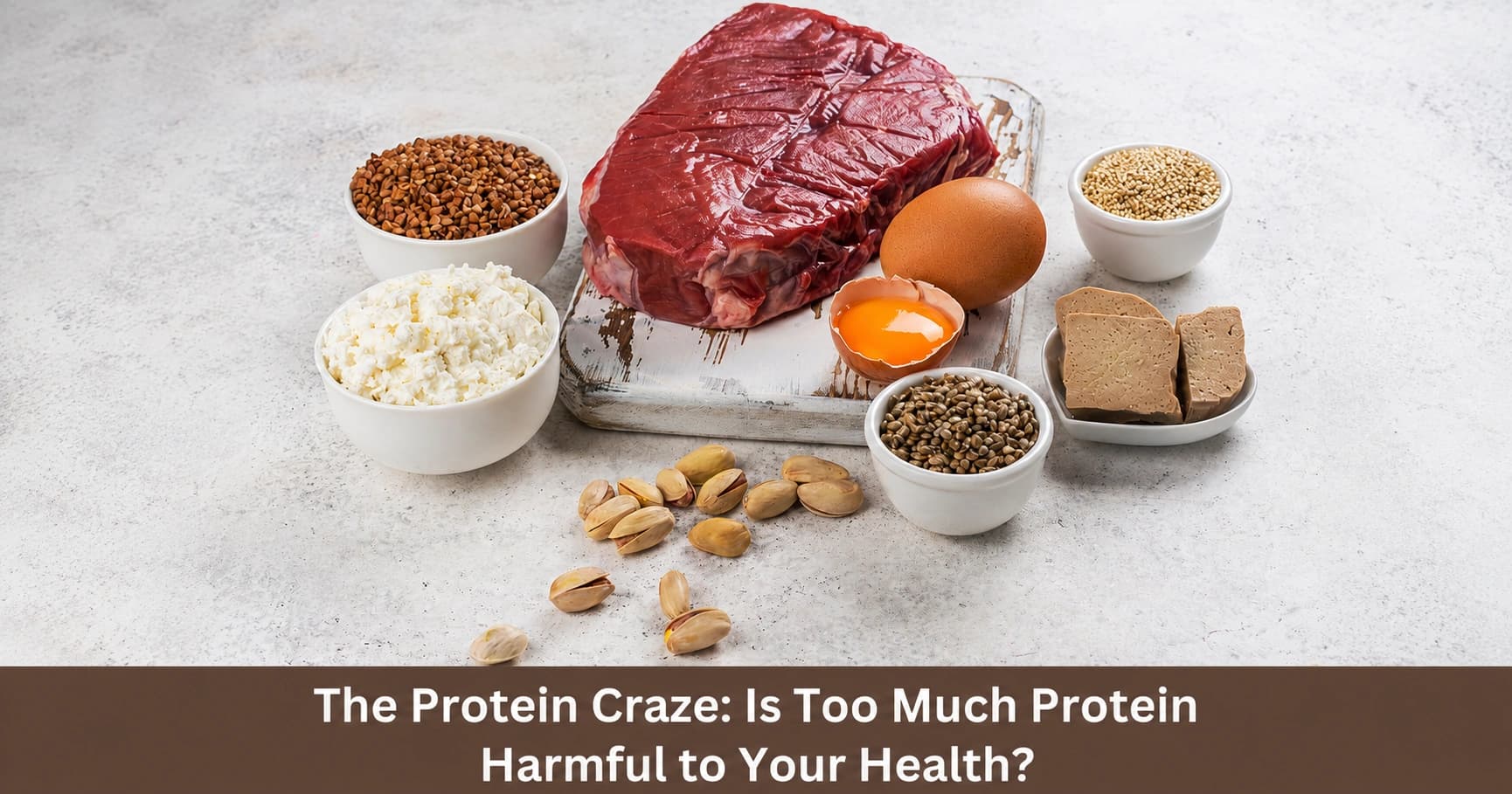
Top Whole-Food Protein Sources
🥚
Eggs6g per egg · rich in leucine
🐟
Salmon17g per 85g · omega-3 bonus
🍗
Chicken Breast35g per 120g · lean & versatile
🫘
Lentils18g per cup · fiber + iron
🫙
Greek Yogurt17g per 170g · gut-friendly
🐟
Sardines23g per 100g · low mercury
🥦
Edamame17g per cup · complete plant protein
🧀
Cottage Cheese25g per cup · slow-digesting casein
Whole-food plant proteins — lentils, chickpeas, edamame, hemp, and quinoa — are increasingly recognized as the smarter long-term choice. Research consistently shows that diets emphasizing plant-based proteins are associated with better heart health outcomes and lower overall cardiovascular risk compared to diets dominated by red and processed meats.
On Protein Powders: Helpful Tool, Not a Foundation
Protein powders can fill genuine gaps — particularly for athletes, older adults with reduced appetite, or people recovering from illness. But they come with risks that aggressive marketing rarely mentions. A Clean Label Project report screening 134 protein powder products found that many contained heavy metals (lead, arsenic, cadmium, and mercury), bisphenol-A (BPA), and pesticides — some at alarming concentrations.
Many protein powders also carry significant added sugars — up to 23 grams per scoop — which can turn a simple protein shake into a high-calorie, blood-sugar-spiking drink. If you do use protein powder, choose a third-party certified product (NSF Certified or Informed Sport) and treat it as a supplement, not a meal replacement.
Smart Supplement Rule
Food first, always. Use protein powder only to top up what real food can't cover on a given day. Check for third-party certification, minimal added sugars, and clean ingredient lists before buying.
Read More:- The Hidden Crisis of Weight Loss Drugs
4 Protein Myths That Simply Won't Die
✗ Myth
You need 1 gram of protein per pound of body weight every single day.
✓ Fact
That figure (2.2 g/kg) is the upper range — useful mainly for competitive bodybuilders in a calorie deficit. Most active people thrive on 1.2–1.6 g/kg.
✗ Myth
Plant proteins are "incomplete" and nutritionally inferior to animal proteins.
✓ Fact
Stanford nutrition researchers call this a persistent fable. Varied plant proteins together provide all essential amino acids — plus fiber, antioxidants, and better heart outcomes.
✗ Myth
High-protein diets damage healthy kidneys over time.
✓ Fact
Recent research disproves this for healthy individuals. The concern is only valid for those with existing kidney disease or decreased kidney function — who should always consult a doctor.
✗ Myth
Protein-fortified packaged foods are as good as natural protein sources.
✓ Fact
Your body absorbs the amino acids, yes — but misses all the fiber, micronutrients, and phytochemicals that come with whole foods. A protein cookie is not an egg.
When More Protein Becomes a Problem
The wellness industry has done a remarkable job making protein seem like it can only do good. The reality is more nuanced. Diets high in red and processed meats have been linked to increased cardiovascular disease risk — partly because of their saturated fat content and partly because of methionine, an amino acid that may raise homocysteine levels, which is associated with blood vessel damage.
According to a registered dietitian at Houston Methodist, "whenever someone says they need a gram of protein per pound of body weight, this is where people start to experience common side effects — constipation, bloating, and stomach pain." Foamy urine and increased thirst can also signal that the kidneys are working overtime to clear excess protein waste.
And crucially: the body cannot store excess protein in any meaningful way. It takes what it needs and excretes the rest — or converts the surplus calories to fat. Loading up beyond your body's requirements doesn't build more muscle. It just increases your grocery bill and your digestive load.
Read More:- Peppermint Oil for High Blood Pressure
Protein, Longevity, and Why This Matters More as You Age
The most compelling reason the protein conversation matters isn't about six-pack abs — it's about aging well. After age 60, adults lose roughly 10% of their muscle mass per decade, a process called sarcopenia that erodes strength, mobility, and independence. Adequate protein intake — especially when combined with resistance training — is one of the most evidence-backed strategies to slow that decline.
The 2025–2030 Dietary Guidelines for Americans highlight a telling gap: 78% of females aged 4–18 do not meet protein food group recommendations, along with significant percentages of older adults. These underserved groups — not gym-goers — are the true targets of improved protein guidance.
The longevity angle is also reshaping the cultural conversation around food. Professor Danit Ein-Gar of Tel Aviv University observes that this shift "is not only a status symbol — it is a change in perception. People look at their body as a system that needs to be preserved and maintained." That perspective, she says, is fundamentally positive: consumers are beginning to understand that what they put into their bodies today has long-term consequences.
✦ ✦ ✦
The Final Answer: Smarter, Not Just More
Protein genuinely matters — more than the old RDA gave it credit for. The 2026 dietary guidelines confirm that most active adults benefit from 1.2–1.6 g/kg per day, distributed across meals, sourced primarily from whole foods. Athletes and older adults may need more. Sedentary adults on a balanced, varied diet likely already hit the mark without buying a single "protein-fortified" product.
The goal isn't to chase grams obsessively. It's to build meals around quality sources — eggs, fish, legumes, lean meats, dairy, and plants — while treating protein supplements as the occasional convenience tool they are, not a dietary cornerstone.
Eat real food. Spread it across your day. Lift weights. Get enough sleep. Your body knows exactly what to do with good nutrition — give it that, and the protein will take care of itself.
🔑 Your Daily Protein Formula — Quick Reference
Active adult: Weight (kg) × 1.4 = daily grams target
Building muscle: Weight (kg) × 1.8
Over 60 or in calorie deficit: Weight (kg) × 1.6
Distribute across 3–4 meals · Prioritize whole foods · Supplement only when needed · Drink plenty of water · Consult a dietitian for personalized guidance.