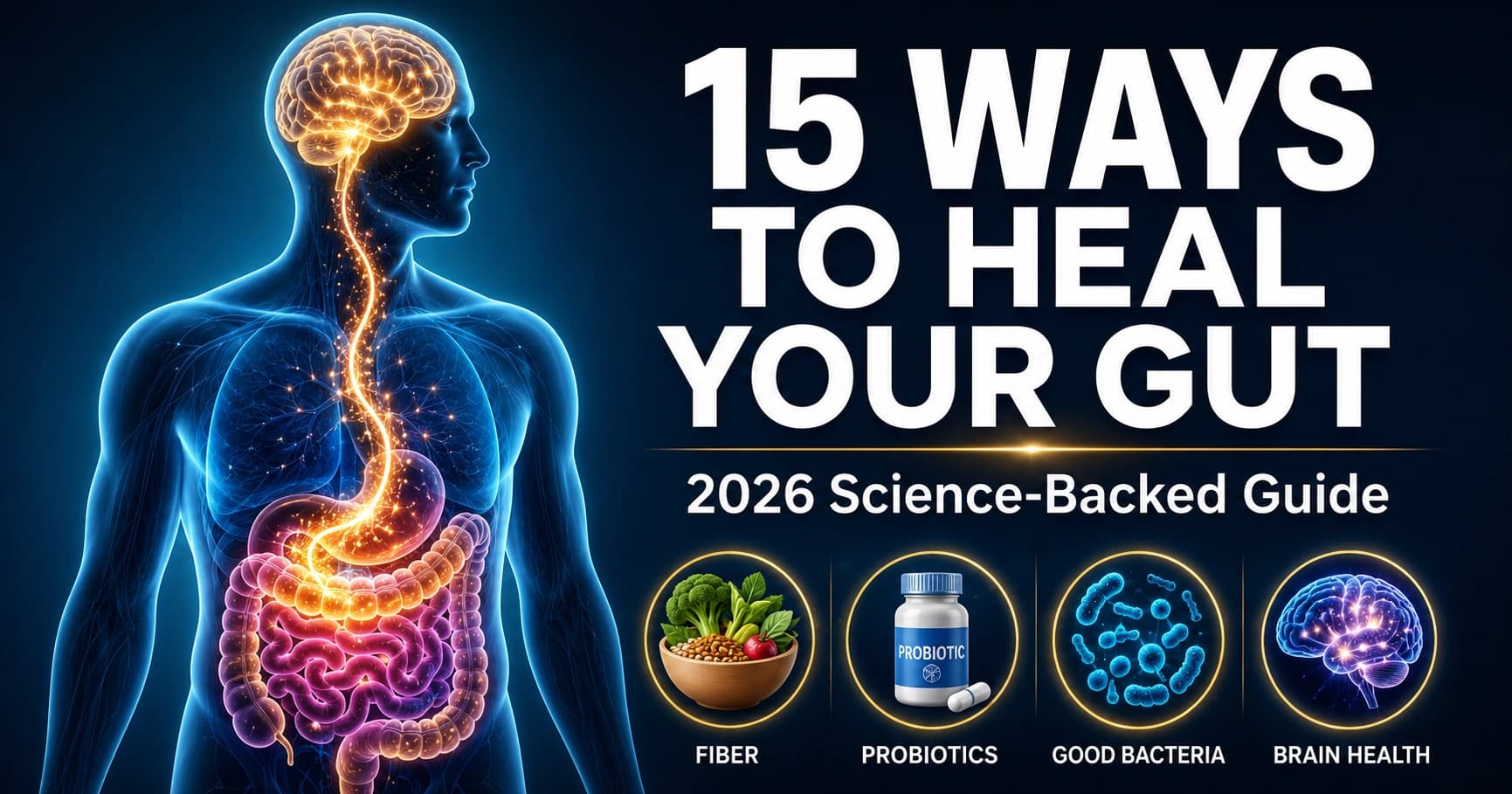
Gut Microbiome: 15 Science-Backed Ways to Heal Your Gut Health in 2026
Deep inside your intestines, a civilization is running your life.
Not metaphorically. Literally.
Right now, approximately 38 trillion microorganisms — bacteria, fungi, viruses, and archaea — live inside your digestive tract. Together they form what scientists call the gut microbiome: the most complex ecosystem in the human body, and arguably the most powerful force governing your overall health.
This community of microbes produces vitamins your body cannot make on its own. It trains your immune system to distinguish friend from foe. It manufactures neurotransmitters that regulate your mood. It controls your metabolism and influences how much fat your body stores. It communicates directly with your brain through a dedicated nerve highway — the vagus nerve.
And when it falls out of balance?
The consequences are staggering — fatigue, bloating, weight gain, poor immunity, brain fog, anxiety, skin problems, food sensitivities, and a dramatically elevated risk of chronic disease.
Here is the most important thing you will read today: your gut microbiome is not fixed. It responds — rapidly and dramatically — to what you eat, how you sleep, how much you move, and how you manage stress.
This guide gives you the full picture: what the gut microbiome actually is, what a healthy one looks like, 10 warning signs yours may be struggling, and 15 proven science-backed strategies to restore, protect, and optimize it.
What Is the Gut Microbiome? (And Why Scientists Are Calling It a "Second Brain")
The gut microbiome is the collective term for all the microorganisms living in your gastrointestinal tract — primarily in your large intestine. Every person carries a unique microbial fingerprint, shaped by:
The way you were born (vaginal delivery vs. C-section)
Whether you were breastfed
Your childhood environment and antibiotic exposure
Your geography and cultural dietary traditions
Your genetics
Your current diet, stress levels, sleep quality, and lifestyle
Scale: If you laid all the DNA of your gut bacteria end to end, it would stretch to the moon and back — multiple times.
Diversity: A typical healthy gut contains 300–500 different species of bacteria. Scientists have identified that this diversity is one of the most important markers of gut health.
Function: Your gut microbiome is not just a passenger in your body. It actively:
Ferments dietary fiber to produce short-chain fatty acids (SCFAs) that feed your colon cells and reduce inflammation
Synthesizes vitamins K2, B12, B7 (biotin), and folate
Trains and calibrates your immune system (approximately 70–80% of your immune tissue is located in your gut)
Produces 90% of your body's serotonin — your primary mood-regulating neurotransmitter
Generates GABA, dopamine precursors, and other neurochemicals that reach the brain
Regulates metabolism and influences how calories from food are extracted and stored
Maintains the integrity of your intestinal wall — the critical barrier between your gut contents and your bloodstream
In 2026, a landmark global study analyzed more than 40,000 human gut microbiomes from dozens of countries and identified specific keystone bacterial groups — including Roseburia, Eubacterium, Faecalibacterium, Alistipes, and Bacteroides — that appear consistently in healthier populations worldwide. These bacteria share a common function: they ferment fiber, produce beneficial metabolites, and manufacture short-chain fatty acids that keep the gut and immune system functioning properly.
What Does a "Healthy" Gut Microbiome Actually Look Like?
This is where the science gets nuanced — and where much of the wellness industry misleads people.
According to leading gut researchers, there is currently no single universal definition of a healthy gut microbiome. Unlike cholesterol or blood pressure, there is no one number or metric that definitively tells you whether your gut is healthy.
Hannah Holscher, professor of nutrition at the University of Illinois, explains: "There's no clinical or scientific consensus around what constitutes a healthy microbiome."
What scientists do agree on are several general indicators of gut health:
1. High microbial diversity. More species generally means a more resilient, adaptable ecosystem. Low diversity is consistently associated with inflammatory diseases, obesity, type 2 diabetes, depression, and autoimmune conditions.
2. Resilience. A healthy gut bounces back quickly after disruption — whether from a course of antibiotics, a bout of food poisoning, or a stressful week. A compromised gut stays disrupted for weeks or months.
3. Abundance of keystone species. Particularly bacteria that produce short-chain fatty acids (butyrate, propionate, acetate), which fuel colon cells, reduce systemic inflammation, and support the gut barrier.
4. A functional, intact gut lining. The single-cell-layer wall of your intestine is the most important barrier in your body. When it is healthy, it allows nutrients through while blocking toxins and pathogens.
5. Balanced microbial communities, not just individual "good" or "bad" bacteria. Dr. Alexander Khoruts, professor at the University of Minnesota, emphasizes: "It could be an entire microbial community as a unit that may be dysfunctional" — not just a single harmful species.
What this means in practice: no single probiotic supplement, no $300 microbiome test kit, and no trendy "gut reset" program can tell you definitively that your gut is healthy or unhealthy. What can move the needle are the consistent, long-term lifestyle choices described in the 15 strategies below.
10 Warning Signs Your Gut Microbiome Is Out of Balance
Your gut communicates its distress through a surprisingly wide range of signals — most of which people attribute to stress, aging, or unrelated causes. Recognizing these signs is the first step to addressing the real root cause.
1. Chronic Bloating, Gas, and Digestive Discomfort
Persistent bloating — especially after meals — is one of the most common signs of gut dysbiosis (microbial imbalance). When the wrong bacteria ferment your food, they produce excess gas and inflammatory byproducts instead of beneficial short-chain fatty acids.
2. Frequent Diarrhea or Constipation (or Both Alternating)
A disrupted microbiome struggles to regulate gut motility. Constipation can indicate insufficient beneficial bacteria and low fiber fermentation. Diarrhea often signals dysbiosis, infection, or compromised gut barrier function. Alternating between both is a classic sign of irritable bowel syndrome (IBS), which has strong microbiome roots.
3. Unexplained Fatigue and Low Energy
Your gut bacteria produce B vitamins and are central to your metabolism. When the microbiome is disrupted, energy extraction from food is impaired, B vitamin synthesis drops, and systemic inflammation rises — all of which produce deep, persistent fatigue that does not respond to extra sleep.
4. Brain Fog, Poor Memory, and Difficulty Concentrating
Through the gut-brain axis (the biological communication highway connecting your gut to your brain via the vagus nerve), gut dysbiosis directly disrupts neurotransmitter production — particularly serotonin and GABA — and triggers neuroinflammation. The result is the exact cognitive impairment people describe as "brain fog."
A 2026 study published in Brain Sciences found that healthy adults who self-reported stress, anxiety, depression, or sleep problems showed significantly different gut microbiome compositions compared to symptom-free adults — confirming that the gut-brain connection operates even in people without diagnosed mental illness.
5. Mood Disorders — Anxiety, Depression, Irritability
This is one of the most consequential and least-understood connections in all of medicine. Your gut produces 90% of your body's serotonin. Imbalanced gut bacteria disrupt serotonin production, increase cortisol reactivity, and promote neuroinflammation — all of which contribute to anxiety, depression, and emotional instability.
Research published in Frontiers in Microbiomes (2026) confirms that gut microbes directly influence neurotransmitter levels, immune signaling, and vagus nerve activity — all of which shape mood, behavior, and cognitive function.
6. Frequent Illness and Slow Immunity
Approximately 70–80% of your immune system's infrastructure is located in and around your gut. Your gut bacteria actively train immune cells to distinguish harmless particles from genuine threats. When the microbiome is disrupted, immune calibration fails — leading to overreactions (allergies, food sensitivities, autoimmune flares) or underreactions (frequent colds, slow recovery from infection).
7. Skin Problems — Acne, Eczema, Rosacea
The gut-skin axis is a real and increasingly well-documented biological relationship. Gut dysbiosis produces systemic inflammation and increases intestinal permeability (leaky gut), which allows bacterial fragments called LPS (lipopolysaccharides) to enter the bloodstream. These trigger inflammatory responses that manifest in the skin as acne, eczema, psoriasis, and rosacea.
8. Food Intolerances and Sensitivities (Especially New Ones)
Developing new sensitivities to foods you previously ate without problem is a key warning sign. A compromised gut barrier allows partially digested food particles to "leak" into the bloodstream, triggering immune reactions that did not previously occur. Common new sensitivities include dairy, gluten, eggs, and high-FODMAP vegetables.
9. Unintentional Weight Changes
Your gut bacteria regulate hunger hormones (ghrelin, leptin), influence how many calories you extract from food, and shape fat storage. Gut dysbiosis is consistently associated with obesity — and research shows that transplanting microbiomes from obese mice into germ-free mice causes those mice to gain weight, even on the same diet.
10. Sleep Disruption and Chronic Poor Sleep Quality
Serotonin — produced predominantly in the gut — is the direct precursor to melatonin, the hormone that regulates your sleep-wake cycle. A disrupted gut microbiome impairs serotonin synthesis, which reduces melatonin availability and fragments sleep architecture. Poor sleep then further disrupts the gut in a damaging feedback loop.
Read More:- The Hidden Crisis of Weight Loss Drugs
15 Science-Backed Ways to Improve Your Gut Microbiome
DIET — The Foundation of Everything
1. Dramatically Increase Dietary Fiber — The Single Most Powerful Gut Intervention
Dietary fiber is not food for you. It is food for your gut bacteria.
When beneficial bacteria ferment dietary fiber, they produce short-chain fatty acids (SCFAs) — particularly butyrate, propionate, and acetate. These compounds are the primary fuel source for colonocytes (colon cells), reduce gut inflammation, strengthen the gut lining, and even influence brain chemistry.
Research from the Frontiers in Nutrition journal (2026) confirms: "Transitioning from a high-fat, low-fiber diet to a fiber-rich diet can induce profound changes in gut microbiota composition within as little as 24 hours."
The fiber targets most people never hit:
Most adults consume 10–15 grams of fiber per day
The recommended minimum is 25–38 grams per day
Hunter-gatherer populations — who have among the most diverse gut microbiomes ever measured — consumed 70–100+ grams daily
Best fiber sources ranked by gut impact:
Legumes: lentils, black beans, chickpeas, kidney beans (highest fiber density)
Oats and barley (beta-glucan fiber — especially beneficial for gut bacteria)
Chia seeds and flaxseeds (soluble fiber + omega-3)
Apples and pears (pectin — a prebiotic fiber)
Jerusalem artichokes and chicory root (inulin — most potent prebiotic fiber)
Leeks, garlic, onions (inulin + FOS)
Leafy greens — spinach, kale, collard greens (eat at least one daily)
Critical rule: Increase fiber intake gradually. Adding too much too quickly causes bloating and gas as your bacteria adjust. Add one new fiber source per week and drink extra water.
2. Eat Fermented Foods Every Single Day
Fermented foods contain live probiotic bacteria that directly introduce beneficial microbial species into your gut. A landmark 2021 Stanford University study found that a diet high in fermented foods increased microbiome diversity and reduced inflammatory markers — outperforming even a high-fiber diet for rapid gut improvement.
The best fermented foods for gut health:
Food | Key Bacteria | Additional Benefit |
|---|---|---|
Kefir | 30+ probiotic strains | Higher diversity than yogurt; low lactose |
Plain yogurt (live cultures) | Lactobacillus, Bifidobacterium | Widely available, well-studied |
Kimchi | Lactobacillus species | Prebiotic vegetables + probiotics |
Sauerkraut | Leuconostoc species | Vitamin C, immune support |
Miso | Aspergillus oryzae | Supports digestive enzyme production |
Tempeh | Rhizopus oligosporus | High protein + fermented soy |
Kombucha | SCOBY cultures | Polyphenols + live cultures |
Important: Always choose unpasteurized or "raw" fermented products where possible — pasteurization kills the live bacteria that make these foods so valuable. Look for "contains live active cultures" on the label.
3. Feed Your Existing Bacteria with Prebiotics
While probiotics add new bacteria to your gut, prebiotics feed the beneficial bacteria already living there — helping them grow, multiply, and outcompete harmful species.
Prebiotics are non-digestible fibers and compounds that selectively nourish beneficial gut microbes. The most well-studied prebiotics include:
Inulin — found in chicory root, garlic, leeks, onions, artichokes
FOS (fructooligosaccharides) — bananas, asparagus, oats
GOS (galactooligosaccharides) — legumes, some dairy products
Resistant starch — cooked and cooled potatoes/rice, green bananas, oats
Prebiotic supplement note: While whole food sources are always preferred, inulin-type fructan supplements (FOS + inulin) are well-studied and effective for those who cannot consistently hit dietary targets.
4. Diversify Your Plant Intake — Aim for 30+ Plants Per Week
One of the most striking findings from the American Gut Project — one of the largest citizen science microbiome studies ever conducted — was that people who ate 30 or more different plant species per week had significantly more diverse gut microbiomes than those eating fewer than 10.
This does not mean eating 30 different vegetables every day. It means counting every unique plant across the week — including herbs, spices, nuts, seeds, legumes, fruits, and vegetables.
A single meal could include: quinoa, black beans, spinach, tomatoes, red onion, garlic, olive oil, lemon, cumin, and coriander — that's already 9 plant species in one dish.
Practical tip: Use a weekly plant tracker app or simple journal. Most people are shocked to discover they rotate through only 8–12 plant foods habitually.
5. Reduce Ultra-Processed Foods and Refined Sugars
This is the other side of the equation — and arguably more impactful than anything you add, because of how rapidly harmful.
Ultra-processed foods (UPFs) — which now make up over 60% of the average American's daily caloric intake — are formulated in ways that:
Deplete beneficial gut bacteria (particularly fiber-fermenting species like Roseburia and Faecalibacterium)
Feed pathogenic and pro-inflammatory bacterial species
Contain emulsifiers (carboxymethylcellulose, polysorbate 80) that directly damage the gut mucus layer
Spike blood sugar, promoting overgrowth of harmful gut species
Displace the fiber, polyphenols, and fermented foods that beneficial microbes need
Refined sugar specifically feeds Candida species and other opportunistic gut organisms, driving dysbiosis. It also promotes gut inflammation and directly impairs the gut barrier.
The goal is not perfection. Reducing ultra-processed food consumption by 50% produces measurable improvements in gut microbiome diversity within weeks.
6. Load Up on Polyphenol-Rich Foods
Polyphenols are plant compounds that act as prebiotics for beneficial gut bacteria while simultaneously delivering powerful anti-inflammatory and antioxidant effects.
Unlike fiber, polyphenols survive digestion partially intact and are metabolized by your gut bacteria — producing bioactive compounds that reduce gut inflammation, strengthen the gut lining, and support immune regulation.
Top polyphenol sources for gut health:
Blueberries, blackberries, raspberries — among the highest polyphenol foods on earth
Dark chocolate (70%+) — flavanols specifically shown to boost Lactobacillus and Bifidobacterium
Green tea — EGCG supports beneficial gut species
Extra virgin olive oil — oleocanthal and hydroxytyrosol are potent anti-inflammatory polyphenols
Red wine (in moderation) — resveratrol shown to increase gut diversity
Walnuts — ellagitannins produce beneficial gut metabolites
LIFESTYLE — What You Do Matters As Much As What You Eat
7. Move Your Body Consistently — Exercise Changes Your Microbiome
Multiple studies confirm that regular aerobic exercise directly increases gut microbiome diversity — independent of diet.
Physically active people consistently have higher levels of butyrate-producing bacteria, particularly Faecalibacterium prausnitzii — one of the most anti-inflammatory bacterial species in the human gut. Elite athletes have been found to carry significantly more diverse and resilient microbiomes than sedentary individuals.
Exercise supports gut health through several mechanisms:
Increases intestinal transit time (reducing constipation and the time food spends fermenting in the colon)
Reduces systemic inflammation (which damages gut bacteria)
Stimulates gut motility through the vagal nerve connection
Reduces cortisol (which disrupts beneficial gut populations)
Minimum effective dose: 150 minutes of moderate aerobic activity per week (30 minutes, 5 days). Brisk walking counts. Cycling counts. Dancing counts.
8. Prioritize Sleep — Your Gut Has Its Own Circadian Rhythm
Your gut microbiome operates on a 24-hour circadian cycle — with different bacterial species becoming active and dominant at different times of day, coordinating with your body's hormonal rhythms.
Sleep disruption does not just affect your energy. It directly alters gut microbiome composition. Studies on shift workers — whose circadian rhythms are chronically disrupted — show significantly lower gut microbial diversity, higher inflammatory markers, and elevated rates of metabolic disease compared to people with regular sleep schedules.
Practical gut-sleep protocol:
Maintain consistent sleep and wake times (including weekends)
Eat your last meal 2–3 hours before bed (late eating disrupts gut circadian rhythms)
Prioritize 7–9 hours of quality sleep
Avoid blue light (screens) 60 minutes before sleep — blue light disrupts melatonin, which is partially regulated by gut serotonin
9. Manage Stress — Chronic Stress Is a Gut Destroyer
The gut-brain connection is bidirectional — and chronic stress is one of the most powerful suppressors of gut microbiome health.
When the HPA (hypothalamic-pituitary-adrenal) axis remains chronically activated — pumping cortisol into the bloodstream — the consequences for the gut include:
Reduced beneficial bacteria populations (particularly Lactobacillus species)
Increased gut permeability (the stress hormone CRH directly loosens tight junctions in the gut lining)
Reduced mucus production (the protective layer that lines the gut wall)
Altered gut motility (explaining why stress causes either diarrhea or constipation)
Suppressed secretory IgA (the primary immune antibody defending the gut)
Effective stress management is therefore not a "nice to have" addition to gut health — it is a biological necessity for maintaining a healthy microbiome.
Gut-protective stress management practices:
Daily mindfulness meditation (10–20 minutes — shown to measurably alter gut bacteria composition within weeks)
Box breathing exercises (4-4-4-4 pattern — activates the vagus nerve and parasympathetic system)
Regular aerobic exercise (dual benefit: gut diversity + cortisol reduction)
Nature exposure (even 20-minute walks in green spaces lower cortisol)
Social connection (isolation elevates cortisol; meaningful relationships reduce it)
10. Hydrate Properly — Water Is Essential for Gut Barrier Integrity
Water is not just digestion's lubricant. It is essential for:
Maintaining the mucus layer that protects your gut lining from bacteria and toxins
Enabling the proper movement of fiber through the digestive tract
Supporting the production of digestive enzymes and bile acids
Facilitating the kidney clearance of bacterial byproducts
Dehydration slows intestinal transit, concentrates gut contents, and stresses the gut lining. Even mild chronic dehydration alters gut microbiome composition over time.
Target: 2–3 liters of water daily (more with exercise or heat). Herbal teas and water-rich foods (cucumbers, watermelon, celery) count toward this total.
11. Be Thoughtful About Antibiotics
Antibiotics are life-saving medicines — and also the most powerful disruptors of the gut microbiome available in modern medicine.
A single course of broad-spectrum antibiotics can eliminate up to 30% of gut bacterial diversity, with some species taking months to recover and others never fully returning. Repeated antibiotic use compounds this damage significantly.
This does not mean avoiding antibiotics when genuinely needed — it means being thoughtful:
Use antibiotics only when prescribed for confirmed bacterial infections (not viral infections like colds or flu)
Ask your doctor whether a narrower-spectrum antibiotic could work
During and after any antibiotic course, prioritize fermented foods and consider a probiotic supplement (Lactobacillus rhamnosus GG and Saccharomyces boulardii are the best-studied for antibiotic-related recovery)
Increase fiber intake post-antibiotics to feed recovering bacterial populations
12. Consider Targeted Probiotic Supplementation
While whole food sources are always preferred, probiotic supplements can play a valuable supporting role — particularly after antibiotics, during high-stress periods, or when dietary diversity is temporarily limited.
What the evidence shows about probiotic supplements:
Most effective for: antibiotic-associated diarrhea, IBS symptom management, traveler's diarrhea prevention
Less clear for: general health optimization in people without specific gut complaints
The research caution: many commercial probiotics contain strains at doses too low to produce meaningful colony changes in the gut
Evidence-backed strains:
Lactobacillus rhamnosus GG — most studied, effective for diarrhea and immune support
Bifidobacterium longum — supports mood, reduces anxiety (gut-brain axis)
Lactobacillus acidophilus — supports lactose digestion, vaginal health
Saccharomyces boulardii — yeast-based; protects gut during and after antibiotic use
Bifidobacterium infantis — reduces IBS symptoms
Key rule: Look for products with at least 10–50 billion CFU, stored refrigerated, with strains named to the specific species level (not just "proprietary blend").
ADVANCED STRATEGIES — For Deeper Gut Health Optimization
13. Understand and Heal Leaky Gut (Intestinal Permeability)
"Leaky gut" — or intestinal hyperpermeability — occurs when the tight junctions between intestinal cells loosen, allowing bacterial fragments, undigested food particles, and toxins to pass into the bloodstream.
This is not a fringe wellness concept. It is a well-documented biological phenomenon studied in peer-reviewed literature under the term "increased intestinal permeability" — and it is now recognized as a contributing factor in autoimmune disease, inflammatory bowel conditions, metabolic disease, and neurological disorders.
What damages the gut lining:
Chronic stress (CRH hormone directly loosens tight junctions)
Non-steroidal anti-inflammatory drugs (NSAIDs) like ibuprofen
Excessive alcohol
Low-fiber, high-processed food diet
Dysbiosis (the wrong bacteria produce toxins that degrade the mucus layer)
Certain food emulsifiers
What heals and protects the gut lining:
Butyrate (produced by fiber fermentation; the primary fuel for gut lining cells)
L-glutamine (amino acid that is the preferred fuel of intestinal cells; 5–10g daily)
Zinc (essential for tight junction integrity; found in pumpkin seeds, oysters, beef)
Collagen/gelatin (supports structural integrity of the gut wall)
Bone broth (rich in glycine, proline, and hydroxyproline — gut-healing amino acids)
Quercetin (flavonoid shown to strengthen tight junction proteins)
Read More:- Peppermint Oil for High Blood Pressure
14. Try a Temporary Low-FODMAP Diet If You Have IBS Symptoms
For people with irritable bowel syndrome (IBS) or small intestinal bacterial overgrowth (SIBO), a short trial of the low-FODMAP diet can dramatically reduce symptoms while identifying personal trigger foods.
FODMAPs (Fermentable Oligosaccharides, Disaccharides, Monosaccharides, and Polyols) are fermentable carbohydrates that are rapidly metabolized by gut bacteria — producing excess gas and symptoms in people with IBS.
High-FODMAP foods to temporarily reduce:
Onions and garlic (high fructans)
Wheat and rye products
Dairy (lactose)
Apples, pears, mangoes (high fructose)
Legumes (high GOS)
Cruciferous vegetables in large amounts
Important: The low-FODMAP diet is a diagnostic and short-term therapeutic tool, not a permanent eating strategy. Long-term avoidance of FODMAPs reduces prebiotic intake and can actually damage gut microbiome diversity. Work with a registered dietitian for proper implementation.
15. Harness the Gut-Brain Axis — Feed Your Mind by Feeding Your Gut
The gut-brain axis is the most exciting frontier in gut health science — and the one with the most immediate practical relevance.
The vagus nerve — the longest nerve in the body — runs directly from the brainstem to the gut, carrying signals in both directions. Approximately 80–90% of vagal signals travel upward from gut to brain — meaning your gut is continuously sending information to your brain, not the other way around.
Your gut microbiome influences this communication by:
Producing serotonin (90% of total body production) — regulates mood, appetite, sleep
Producing GABA — the brain's primary inhibitory (calming) neurotransmitter
Producing dopamine precursors — influences motivation and reward
Regulating cortisol sensitivity through HPA axis modulation
Generating short-chain fatty acids that cross the blood-brain barrier and influence neuroinflammation
2026 research breakthrough: A study published in Brain Sciences found that people with self-reported anxiety, depression, stress, and sleep problems had measurably different gut microbiome compositions — including lower alpha-diversity and distinct differences in specific bacterial taxa compared to symptom-free individuals. This confirms that improving gut health may directly improve mental health outcomes.
Practical gut-brain protocol:
Eat a diverse, fiber-rich diet (serotonin production depends on tryptophan from food + healthy gut bacteria to convert it)
Take fermented foods daily (Lactobacillus and Bifidobacterium directly influence vagal signaling)
Practice vagus nerve stimulation: deep diaphragmatic breathing, cold water face immersion, humming, gargling with water
Manage stress aggressively (cortisol suppresses gut serotonin production)
Consider Bifidobacterium longum specifically — the most-studied psychobiotic with evidence for reducing anxiety and improving cortisol reactivity
Read more:- Urgent FDA Warning: Over 3 Million Eye Drops Recalled at CVS, Walgreens, and Rite Aid Over Safety Concerns
The Truth About Gut Health Tests and Supplements
In 2026, a multi-billion-dollar industry has grown around the idea that you need to constantly test, reset, and optimize your gut microbiome with expensive products.
Leading researchers want you to know the truth:
Microbiome testing: Commercial gut microbiome tests (ranging from $99 to $500+) provide information about which bacterial species are present in your sample — but cannot currently tell you whether your microbiome is healthy or what specifically to do about it. As Professor Hannah Holscher states: "There's no clinical or scientific consensus around what constitutes a healthy microbiome" — which means there is no validated benchmark to compare your results against. The science has not yet reached the point where these tests deliver clinically actionable guidance for most people.
Probiotic supplements: They can help in specific situations (antibiotic recovery, IBS, traveler's diarrhea) but the evidence for general gut "optimization" in healthy people is much weaker than marketing suggests. The gut microbiome is too complex and individual for a 3-strain supplement to comprehensively "fix."
The evidence is clear on this: Long-term diet and lifestyle changes outperform any supplement or test kit every time, in every study.
Read More: Vitamin B12 Deficiency: 10 Warning Signs
A 14-Day Gut Health Transformation Plan
Here is a practical, immediately actionable protocol built on the 15 strategies above:
Week 1 — Add Before You Remove:
Day 1–2: Add one fermented food daily (start with kefir or plain yogurt)
Day 3–4: Add one new fiber source per meal (beans, oats, or seeds)
Day 5–7: Add 2 new plant species per day (herbs and spices count)
Throughout: Drink 8+ glasses of water per day
Week 2 — Remove and Optimize:
Replace one ultra-processed meal per day with whole foods
Establish a consistent sleep and wake time
Add 30 minutes of walking 5 days per week
Practice 10 minutes of deep breathing or meditation daily
Take note of which symptoms (bloating, fatigue, mood, sleep) have already improved
Most people report noticeable improvements in energy, bloating, and mood within 5–10 days. Full microbiome restoration after significant dysbiosis typically requires 2–3 months of consistent changes.
When to See a Doctor About Your Gut
Most gut issues respond to dietary and lifestyle changes. But some symptoms require professional medical evaluation:
Blood in stool (red or black/tarry)
Severe abdominal pain that does not resolve
Unexplained significant weight loss
Persistent diarrhea lasting more than 3–4 weeks
Difficulty swallowing
Jaundice (yellowing of skin or eyes)
Symptoms of anemia (extreme fatigue, pale skin, shortness of breath)
These can signal conditions including inflammatory bowel disease (Crohn's, ulcerative colitis), colorectal cancer, celiac disease, or other serious digestive disorders that require diagnosis and treatment beyond lifestyle modification.
The Bottom Line: Your Gut Is Your Foundation
Everything begins in the gut.
Your energy, your immunity, your mood, your mental clarity, your weight, your skin, your sleep — all of it is profoundly influenced by the 38 trillion microorganisms living in your intestines.
The science in 2026 is more certain than ever: a diverse, thriving gut microbiome is not a luxury. It is the biological foundation of whole-body health.
And the good news — the genuinely remarkable news — is that you can begin changing it today. Not with an expensive test kit or a trendy supplement. With real food. With sleep. With movement. With stress management. With consistency.
Start with one thing from this list. Add another next week. By month two, your gut — and everything your gut influences — will be different.
Read More: Brain Health: 12 Proven Ways to Boost Memory
Medical disclaimer: This article is for informational and educational purposes only. It does not constitute medical advice and is not a substitute for professional healthcare guidance. Always consult a qualified physician or registered dietitian before making significant dietary or supplementation changes, particularly if you have existing digestive conditions or chronic health issues.