Tumor Lysis Syndrome (TLS) Nursing Notes: Pathophysiology, NCP & Management | NORCET & NCLEX
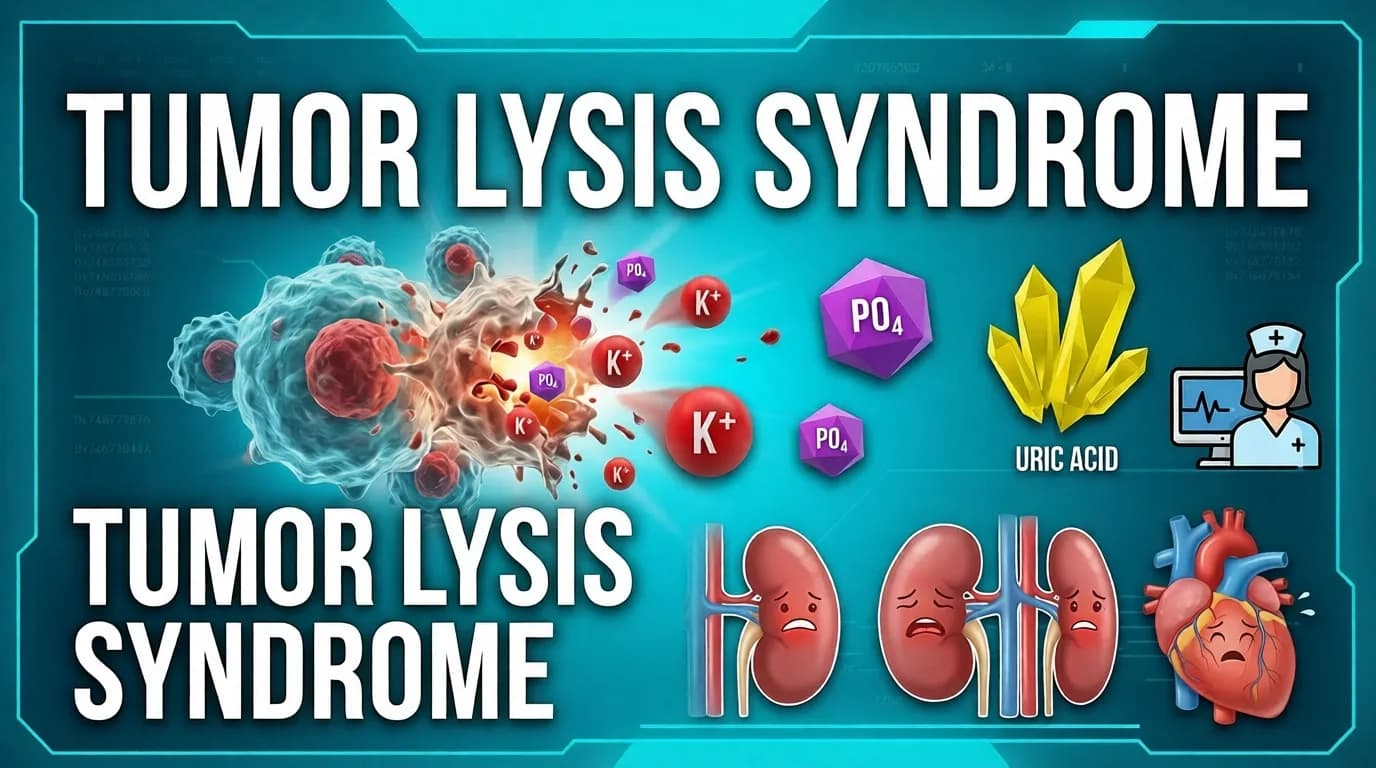
Tumor lysis syndrome (TLS) is a life-threatening oncologic emergency that occurs when a large number of cancer cells are rapidly destroyed, releasing their intracellular contents into the bloodstream. For nursing students preparing for NORCET and NCLEX exams, mastering TLS is essential, as it often appears in clinical scenario questions.
In these comprehensive nursing notes, we explain the precise pathophysiology of tumor lysis syndrome, the common electrolyte imbalances, and provide a ready-to-use nursing care plan (NCP).
What Causes Tumor Lysis Syndrome?
TLS typically occurs within 24 to 48 hours of starting aggressive chemotherapy or radiation therapy, especially in patients with rapidly growing tumors.
• Acute Lymphoblastic Leukemia (ALL)
• Burkitt's Lymphoma
• Non-Hodgkin's Lymphoma
The Pathophysiology of TLS (Simplified for Exams)
Instead of complex paragraphs, understand the disease process through this simple sequence. When chemotherapy attacks a large tumor, the cells burst (lyse).
Inside a normal cell, potassium, phosphorus, and nucleic acids all exist at high concentrations. When these cells all burst at once:
Nucleic acids are catabolized in the liver to form Uric acid, causing severe Hyperuricemia.
Potassium enters the bloodstream, causing Hyperkalemia.
Phosphorus is also released, leading to Hyperphosphatemia.
Since Phosphorus binds with Calcium, the sudden increase in Phosphorus reduces free Calcium in the blood, resulting in Hypocalcemia.
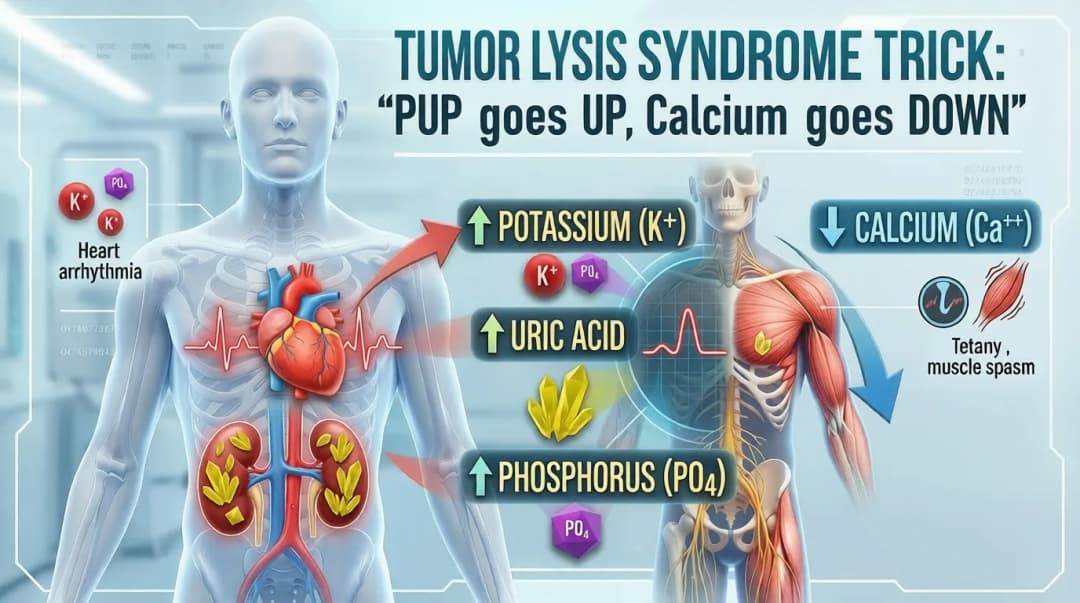
Quick Mnemonic to Remember TLS Electrolytes: "PUP goes UP, Calcium goes DOWN
Phosphorus (Up) | Uric Acid (Up) | Potassium (Up) | Calcium (Down)
Classic Signs & Symptoms (System-Wise)
When assessing a patient for TLS, nurses should primarily monitor for symptoms related to these four electrolyte imbalances:
• Cardiac (Hyperkalemia): tall, peaked T waves, widened QRS complex, bradycardia, or potential ventricular fibrillation. (Most immediate life-threatening)
• Renal (Hyperuricemia): uric acid crystals block the renal tubules, causing acute kidney injury (AKI), flank pain, and oliguria (low urine output).
• Neuromuscular (Hypocalcemia): muscle cramps, tetany, positive Chvostek sign (facial twitch), and positive Trousseau's sign (carpal spasm).
• Gastrointestinal: nausea, vomiting, and diarrhea.
NANDA Nursing Care Plan for Tumor Lysis Syndrome
Unlike general medical sites, here is a clinical description of nursing practice:
Nursing Diagnosis | Nursing Interventions | Rational |
Risk for Decreased Cardiac Output r/t Hyperkalemia | Monitor the ECG continuously for prolonged T waves. Have IV regular insulin with 50% dextrose ready to administer. | Insulin pushes potassium back into the cells, temporarily protecting the heart. |
Risk for Impaired Renal Function r/t Uric acid crystallization | Administer aggressive IV fluids (normal saline) at a rate of 150–200 milliliters per hour as directed. Strictly monitor the I/O. | Additional hydration flushes out the kidneys and also prevents the crystallization of uric acid in the renal tubules. |
Risk for Injury r/t Hypocalcemia | Assess the Chvostek and Trousseau signs. Keep IV calcium gluconate on standby. | Early detection of tetany can prevent serious neuromuscular complications and seizures. |
Pharmacological Management: The Nurse's Role
Knowing the difference between these medications is a frequent NORCET MCQ:
• Allopurinol: Can be given before chemotherapy. It prevents the formation of new uric acid.
• Rasburicase (Eliteek): Given during acute TLS. It actually breaks down and clears existing uric acid in the blood.
• Sodium polystyrene sulfonate (Kaxolate): Removes potassium through the stool. It is given orally or via enema.
Exam Corner: Check Your Knowledge
Question 1. A nurse is caring for a patient who has developed tumor lysis syndrome. Which electrolyte imbalance should the nurse expect?
A) Hypokalemia, hypercalcemia, hypophosphatemia
B) Hyperkalemia, hypocalcemia, hyperuricemia
C) Hypernatremia, hypocalcemia, hyperkalemia
D) Hypouricemia, hypercalcemia, hyperkalemia
(Answer: B)
Frequently Asked Questions (FAQs)
Q.1 : How do you prevent Tumor Lysis Syndrome?
Answer: The gold standard for prevention is aggressive intravenous hydration 24–48 hours before chemotherapy, along with a prophylactic dose of allopurinol to keep uric acid levels low.
Q.2 : What is the most life-threatening complication of TLS?
Answer: Cardiac arrest due to severe hyperkalemia is the most immediate life-threatening complication, followed by acute kidney failure due to hyperuricemia.